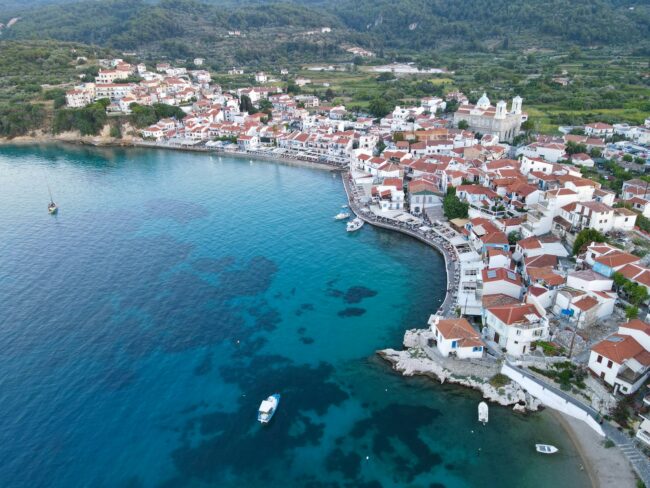

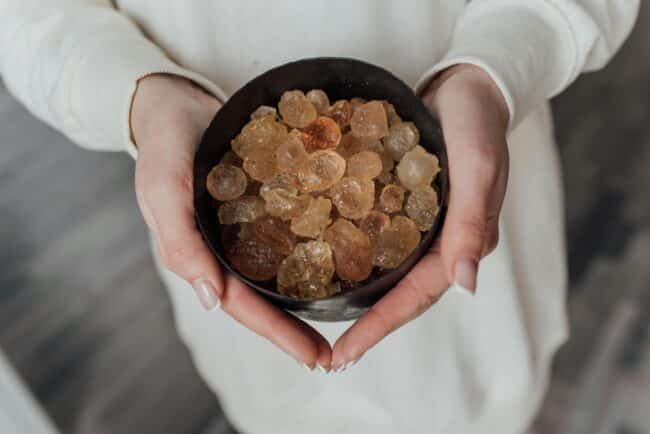
The island of Chios, part of the North Aegean Islands, holds a botanical and cultural treasure considered unique worldwide: the mastic tree, which produces a resin that crystallizes in significant quantities. In the southern part of the island lies a region known as the “Mastichochoria“, commonly referred to as the mastic villages.
This is a cluster of 24 medieval villages founded and shaped around the production of the valuable resin, earning it the nickname “the tears of Chios.” Throughout history, the resin has been used as medicine, as a base for food and beverages, and as a raw material in cosmetics. Even today, it remains the island’s economic and cultural backbone.
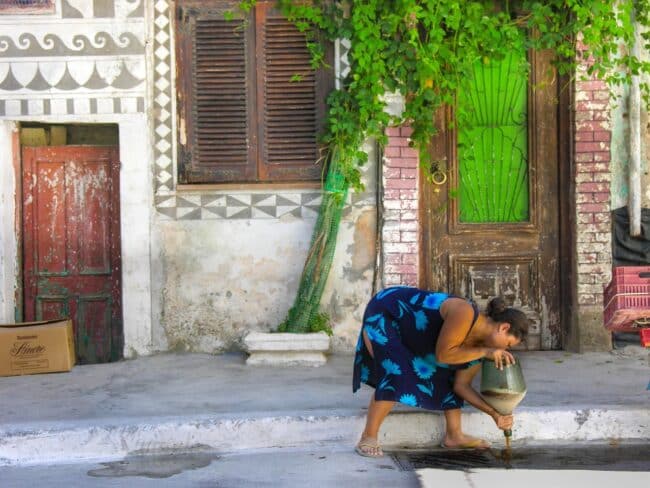
The atmosphere in these villages feels like a journey back in time. Fortified architecture, narrow maze-like alleys, and geometric decorations on house walls create the impression of an open-air museum.
Unlike classic Greek islands painted in blue and white – led by Santorini, Mykonos, Paros, and Naxos – the mastic villages feature earthy tones, grey stone, and distinctive textures.
This is an authentic, tranquil, and deeply enriching destination for those seeking to discover a different side of Greece – one that is rooted, fascinating, and where agricultural tradition and history merge into a single experience.
Who Should Visit the Mastic Villages of Chios?
For couples, the mastic villages offer a romantic destination that provides peace and intimacy away from tourist crowds. Wandering through the narrow streets of Pyrgi or Mesta at dusk, sitting in small taverns in shaded village squares, and staying in restored stone houses create a truly magical holiday atmosphere.
You will find a blend of history, excellent cuisine, and secluded beaches – making the area ideal for a unique honeymoon or a relaxed couples’ getaway. Staying within the villages is highly recommended to experience the quiet, illuminated alleys and the charm that emerges once day visitors leave.
Families visiting the mastic region will enjoy an educational and enriching experience. Learning about the mastic production process at the Chios Mastic Museum or directly in the groves is fascinating for both children and adults.
The fortified villages, built like castles with towers and narrow passages, spark children’s imagination. The fact that most village centers are closed to vehicle traffic allows children to explore relatively safely.
The proximity to comfortable beaches with crystal-clear water allows for the perfect combination: cultural exploration alongside fun family beach time.
Groups of history, architecture, and photography enthusiasts will find the mastic villages rich in professional interest. Groups can explore different villages, discover their unique characteristics, and enjoy meals based on local ingredients.
Independent travelers and nature lovers will find the mastic villages a true paradise. The villages are connected by walking trails, making it an excellent destination for those who enjoy exploring on foot, connecting with locals, and experiencing authentic Greece.
Independent travelers will enjoy discovering hidden churches, secret springs, and quiet coves, while experiencing the warm and genuine hospitality of the locals.
History and Character of the Mastic Villages
The history of the 24 mastic villages is closely tied to the Republic of Genoa, which ruled here during the 14th-16th centuries. The Genoese recognized the immense economic value of mastic and established the Mastichochoria as a well-organized defensive system.
The villages were built in fortified layouts: houses were attached to one another, forming an outer wall with no outward-facing windows; streets were narrow and winding to confuse invaders; and each village had a central watchtower. This design protected the local mastic resin – known as “white gold” – from pirates and foreign armies.
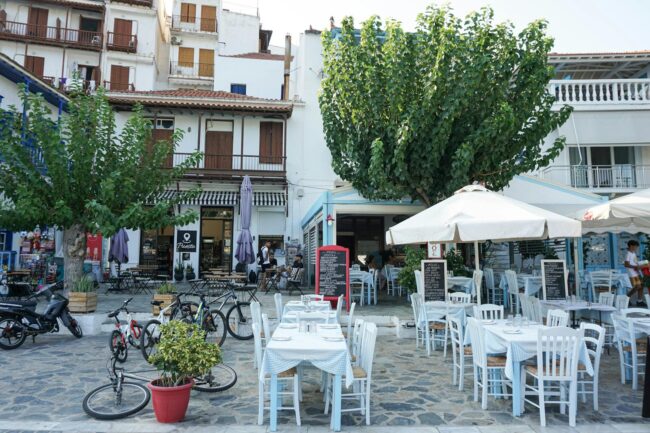
The character of the region is shaped by its deep connection to the land and the mastic tree. Even today, many residents are involved in cultivating and harvesting mastic – a process that is almost entirely manual and requires patience and precision.
Life here unfolds at a relaxed pace around the central square, the heart of social life. The unique architecture – especially the black-and-white geometric sgraffito decorations in Pyrgi – gives the area a visual identity unlike anywhere else in Greece.
The atmosphere in the mastic villages blends local pride with centuries-old tradition. Residents preserve their customs, language, and cuisine, while warmly welcoming visitors.
Despite the major wildfire that struck southern Chios in 2012 and damaged many groves, the region has recovered and remains the world’s exclusive center for mastic production. It continues to preserve its medieval charm and reflects the strong connection between people and landscape.
It is important to note that mastic production is still in a long recovery process, as the trees take years to mature and produce resin. In the meantime, prices of mastic products continue to rise due to limited supply.
The 24 Mastic Villages of Chios
- Pyrgi – the largest and most famous, known as the “painted village” for its intricate geometric decorations.
- Agios Georgios Sikoussis – a mountain village with panoramic views of the Aegean Sea.
- Armolia – known for its pottery tradition and colorful ceramics.
- Elata – a fortified village with stone alleys and impressive arches.
- Exo Didima – a peaceful rural village located alongside its “twin.”
- Messa Didima – the twin village with authentic stone buildings.
- Flatsia – a small settlement reflecting traditional agricultural life.
- Kalamoti – one of the larger villages, with two-story stone houses.
- Kallimasia – home to a rich folklore museum.
- Kataraktis – a charming seaside fishing village.
- Kini – surrounded by greenery, olive groves, and mastic trees.
- Lithi – known for its sandy beach and fishing harbor.
- Mesta – the best-preserved medieval village, built like a labyrinth.
- Mirmigi – a tiny, hidden village reflecting traditional life.
- Nenita – a large village with open sea views.
- Neochori – a picturesque village with welcoming residents.
- Olimpi – a fortified village near a famous cave.
- Pagida – a strongly agricultural area.
- Patrika – a quiet village with intimate squares.
- Thimiana – known for its reddish stone quarries.
- Tholopotami – built on a hillside with natural springs.
- Vavili – near a Byzantine church.
- Vessa – exceptionally well-preserved with uniform architecture.
- Vouno – a peaceful traditional settlement.
Accommodation in the Mastic Villages
Accommodation mainly consists of restored stone houses, authentic guest apartments, and small boutique hotels located within or near the fortified villages.
Staying in these historic buildings allows visitors to experience the spirit of the place through thick stone walls, wooden ceilings, and windows overlooking picturesque alleys. There are no large resorts here – preserving the intimate and peaceful atmosphere.
Most accommodations are located in larger villages such as Mesta, Pyrgi, and Olimpi, though quality options can also be found on village outskirts.
Hospitality is often personal, with hosts eager to share recommendations for hidden taverns and lesser-known beaches. Advance booking is recommended, especially in summer, due to limited availability.
Things to Do in the Mastic Villages
A visit naturally begins in Pyrgi, the “painted village,” known for its distinctive sgraffito patterns.
In the village center stands the Church of the Holy Apostles, a 14th-century structure decorated with Byzantine frescoes.
Mesta is considered the best-preserved fortified village in Greece, built as a closed ring with limited entry points and narrow, arched streets.
At its center stands the Church of Taxiarchis, one of the largest on the island.
To fully understand the importance of mastic, visit the Chios Mastic Museum, which showcases the history and process of mastic cultivation.
Nearby Olimpi offers a unique cave experience. The Olimpi Cave features stunning stalactites and stalagmites. The cave maintains a constant temperature of 18°C and operates seasonally.
Beaches Near the Mastic Villages
The southern beaches of Chios are among the island’s most beautiful, featuring black volcanic pebbles and sandy shores with deep turquoise waters.
- Mavra Volia – famous for its black volcanic pebbles.
- Vroulidia Beach – quiet and ideal for snorkeling.
- Agia Fotia – organized and popular.
- Komi Beach – sandy and family-friendly.
Nightlife and Entertainment
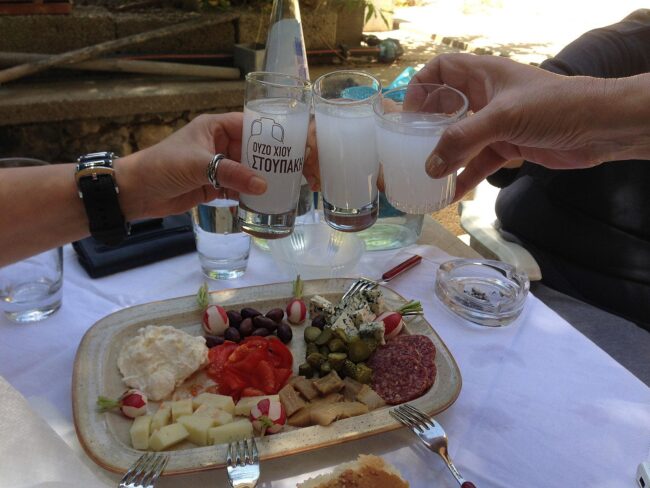
Nightlife here revolves around ouzo bars and taverns rather than clubs. Evenings are spent in village squares enjoying local drinks like “souma” or mastic liqueur alongside small plates of meze.
Transportation and Getting There
Chios can be reached by flight or ferry. Daily flights operate from Athens, while ferries connect to Piraeus, Lesvos, and Samos.
To explore the mastic villages effectively, renting a car is highly recommended.
Important Tips
- Best time to visit: May to October, with September being ideal.
- Gear: Comfortable walking shoes are essential.
- Prices: Chios is relatively affordable compared to Cycladic islands.
- For families: The mastic museum is stroller-friendly and interactive.
- Shopping: Buy authentic mastic products from certified stores.
The mastic villages of Chios are far more than a tourist destination – they are a living testament to history and a deep connection between people and nature.
Visitors will not only discover a place where time seems to stand still, but a region where every alley and tree tells a story spanning centuries.
מתוייג ב:
Rustic