
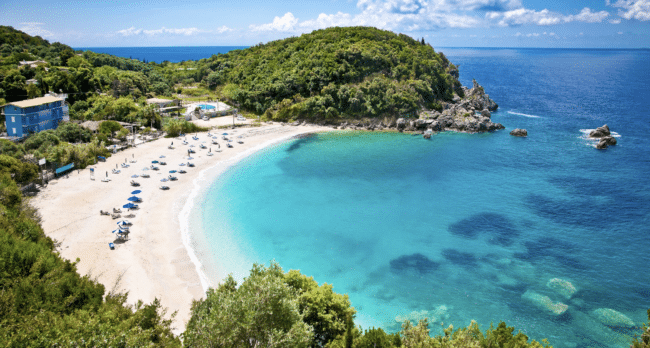
Greece’s coastline stretches for nearly 15,000 kilometres of seemingly endless shoreline — the longest in the Mediterranean basin — and conceals within it some of the most spectacular stretches of sand and pebble on the planet. For Greeks, the beach is far more than a place to unwind or cool off on a hot summer’s day; it is an entire cultural space, a social gathering point, and a source of national pride. A turquoise paradise.
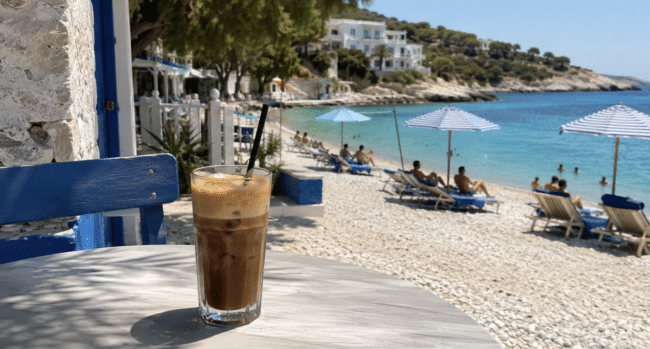
The beach in Greece is an inseparable part of the country’s collective soul and culture. Every bay, every tucked-away strip of sand, every dramatic stretch of cliffs has its own character, its own unique history, and an atmosphere that simply cannot be replicated elsewhere. The mood, the culture, the music, and even the cuisine of Greece and its islands are all profoundly shaped by the sea — it is quite simply woven into the fabric of daily life here. This guide will take you a little beyond the familiar postcard images and into the nuances and cultural elements that make Greek beach culture a genuinely rich experience.
The Sea and the Beach in Greek Culture
Since ancient times, the Aegean and Ionian seas have shaped the history and character of life in Greece. The sea was never merely a trade route or the arena for historical battles — it was a source of life, a wellspring of inspiration, and an everyday space of calm and leisure. In Greek mythology, Poseidon ruled the depths, yet the nymphs and gods always found refuge on the hidden shores of the Greek islands. The local way of life on the Greek islands — often referred to as “Nisiotiki Zoi” (island life) — is built on a deep connection between people and the waterline, and a profound appreciation for clear waters and the sea breeze.
In recent decades, with the global rise of tourism, some beaches (and islands) have transformed into vibrant cosmopolitan hubs — but the heart of Greek beach culture has remained simple, unhurried, minimalist, and unaffected. For a typical Greek, a day at the sea begins early in the morning or in the late afternoon, to avoid the fierce midday sun, and always includes a cold coffee, lively conversation with friends, and a long, restorative swim in cool, clear water.
Unlike many countries where beach culture is tightly managed, heavily regulated, or fully commercialised, Greece has a strong civic tradition of protecting the public’s right to free and accessible beaches. Locals value beaches where nature remains wild and undisturbed by human intervention, and will often prefer to lay a towel on a pebbly shore rather than rent an expensive sun lounger on a crowded, noisy beach. To visitors this can sometimes feel a little unexpected — but there is something wonderfully direct and quintessentially Greek about it.
The atmosphere along Greece’s beaches also varies significantly between the different island groups and the mainland coastline. The Ionian Islands, for instance, are characterised by white limestone cliffs and electric-blue waters, while the Cyclades are windswept, with glass-clear water and wilder, more secluded shores. And that variety is yet another beautiful dimension of Greek beach culture.
Key Terms in Greek Beach Culture
- Organised Beach (Οργανωμένη Παραλία) — A beach with tourist infrastructure including sun loungers, parasols, changing facilities, and often a kiosk or beach bar.
- Natural Beach (Ανοργάνωτη Παραλία) — A completely undeveloped beach with no facilities whatsoever. Locals heading to one of these will always bring their own umbrella, cold water, and a cool box full of fruit.
- Kandina — A mobile food truck or small kiosk typically found at the edges of wild or remote beaches, serving cold coffee, local pastries, a simple souvlaki, and soft drinks.
- Meltemi (Μελτέμι) — Strong northerly summer winds that blow mainly across the Aegean islands (especially the Cyclades) during July and August. These winds directly influence locals’ daily beach choices, driving them towards sheltered southern shores to avoid strong waves and blowing sand.
- Βότσαλο — Smooth pebble beaches, common throughout Greece. Locals tend to favour these over sandy ones because the water stays crystal clear and doesn’t cloud with sand.
- Ammodia (Αμμουδιά) — A soft, golden sandy beach, preferred mainly by families with young children for its comfort and gently shelving entry into the water.
The Ten Most Beautiful Beaches in Greece
Alright — we’ll admit this is a near-impossible task, but we’ll give it a go. Compiling a “top 10” from the infinite array of stunning beaches scattered across this incredible country is genuinely difficult, especially when you could easily put together such a list for every single island or island group. Nevertheless, here is our carefully curated selection of ten exceptional beaches, chosen for their beauty, high level of preservation, authenticity, and water quality:
Balos Beach, Crete
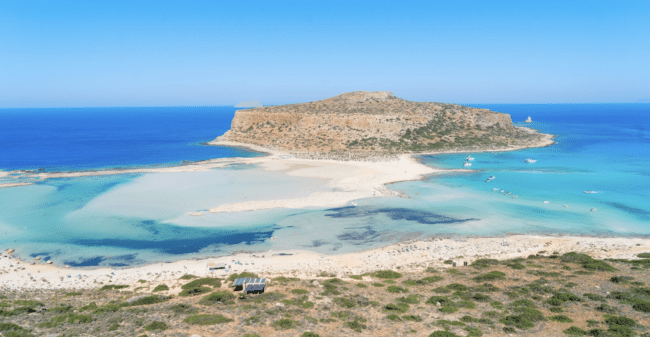
One of the most photographed and breathtaking stretches of coastline in the world. This natural lagoon sits in the north-west of Crete, in the Chania region. The lagoon’s waters are shallow, warm, and extraordinarily clear, and the sand has a delicate pinkish hue created by millions of crushed tiny shells. Access is either via a rough dirt track followed by a short downhill walk, or by boat departing from Kissamos.
Myrtos Beach, Kefalonia
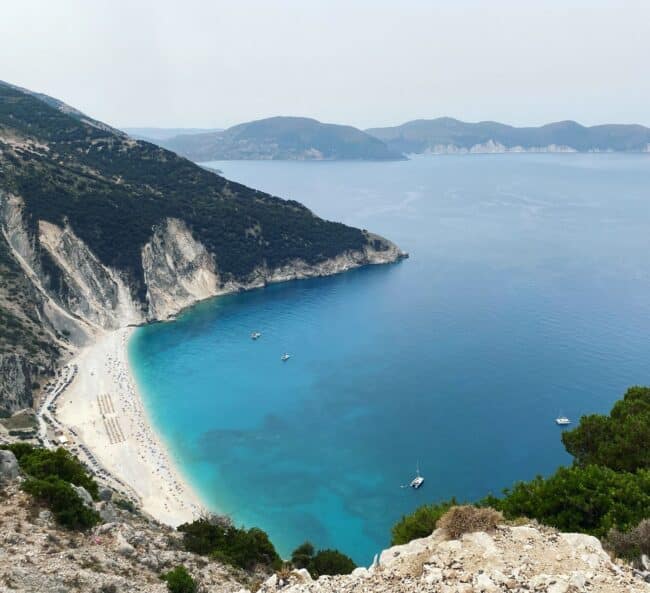
Widely regarded as one of the most beautiful beaches in the world, and the defining image of the island of Kefalonia. Nestled between two steep mountains, its shoreline is composed of brilliantly white, gleaming pebbles. The contrast between the white stones and the Ionian Sea produces a deep, mesmerising shade of blue that looks almost too beautiful to be real. The entry into the water is relatively deep and steep, making it less suitable for very young children — but the view from the clifftop vantage point above the beach at sunset is an unforgettable experience.
Porto Katsiki Beach, Lefkada
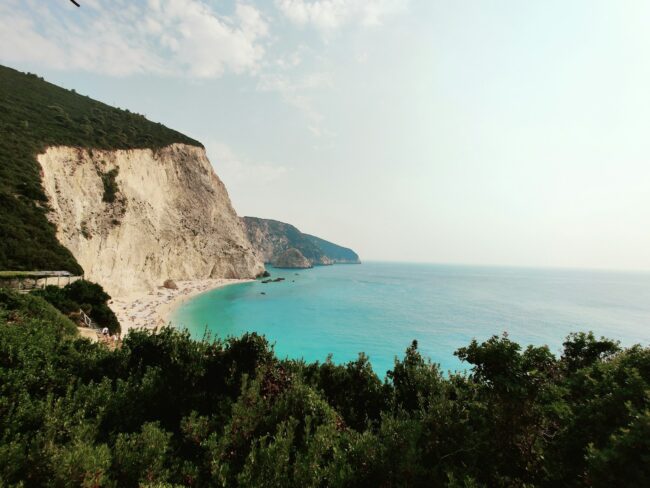
An iconic beach at the southern tip of the island of Lefkada, which is connected to the Greek mainland by a bridge. The name translates as “Goat Harbour,” since in times past only goats could reach this secluded and beautiful strip of shore. Today, a long staircase carved into the cliff face leads visitors down to one of the most stunning beaches in the Ionian Sea. The towering white cliff above provides natural shade in the afternoon hours, and the water is exceptionally clear with a gorgeous turquoise hue.
Sarakiniko Beach, Milos
Sarakiniko on the island of Milos is entirely unlike any other beach in Greece. Brilliant white volcanic rock formations, sculpted by wind and waves over thousands of years, give the place a breathtaking, almost lunar appearance. There is no conventional sand here — instead, smooth rock surfaces invite you to stretch out, while a narrow inlet provides easy access to the crystal-clear water. The spot is particularly beloved by photographers and those who enjoy cliff jumping.
Elafonisi Beach, Crete
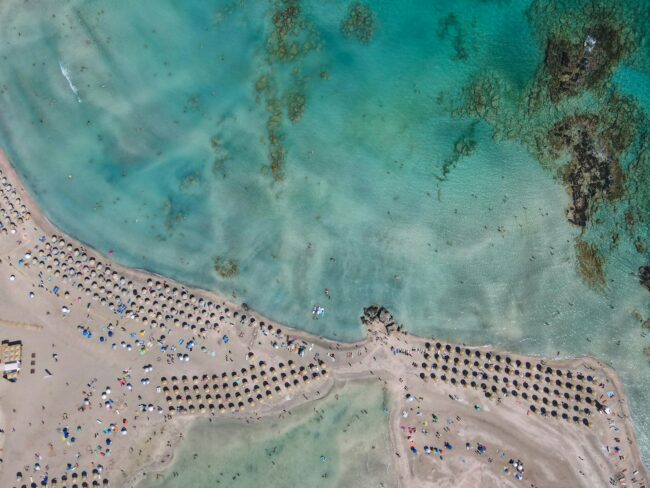
Another spectacular beach on Greece’s largest island, this time in the south-west of Crete. Elafonisi is in fact a small peninsula separated from the main shoreline by a shallow lagoon that can be waded across on foot. The beach is world-famous for its distinctive pink sand — composed of millions of crushed shells — and for its shallow, calm waters that are perfectly suited to families with children. The entire area is designated as a protected nature reserve.
Voidokilia Beach, Peloponnese
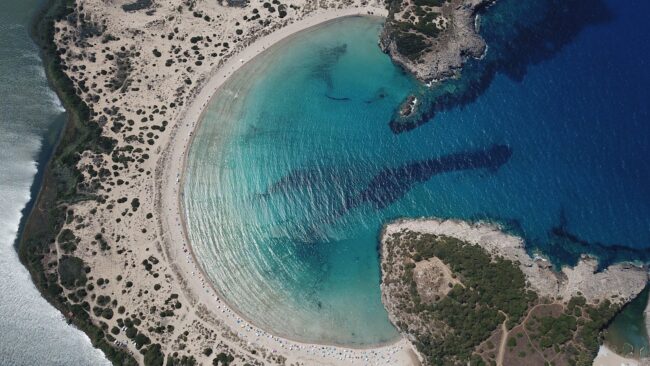
A truly distinctive beach in the Messinia region of the south-western Peloponnese, formed in the perfect symmetrical shape of the Greek letter omega (Ω). The beach is framed by golden sand dunes and surrounded by historically significant archaeological sites. The waters of the sheltered bay are calm, warm, and very shallow, with no strong currents. Above the beach stands an ancient Venetian fortress, lending the place a wild and atmospheric historical backdrop. The beach is deliberately left completely unorganised to protect its local ecology.
Agios Prokopios Beach, Naxos
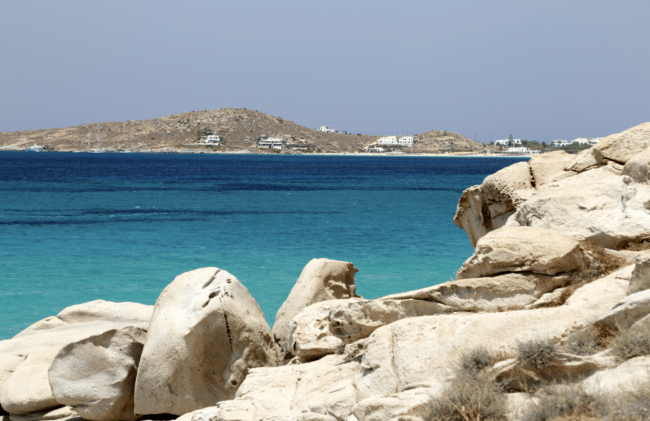
The island of Naxos is renowned for its long sandy beaches, but Agios Prokopios is considered the jewel in the crown. A stretch of soft golden sand extending for over a kilometre, it is well sheltered from the meltemi winds. The water here resembles an enormous swimming pool in its clarity and turquoise colour. Part of the beach is organised with sun loungers and local fish restaurants, while the rest remains completely open and natural.
Kavourotrypes Beach, Macedonia (Northern Greece)
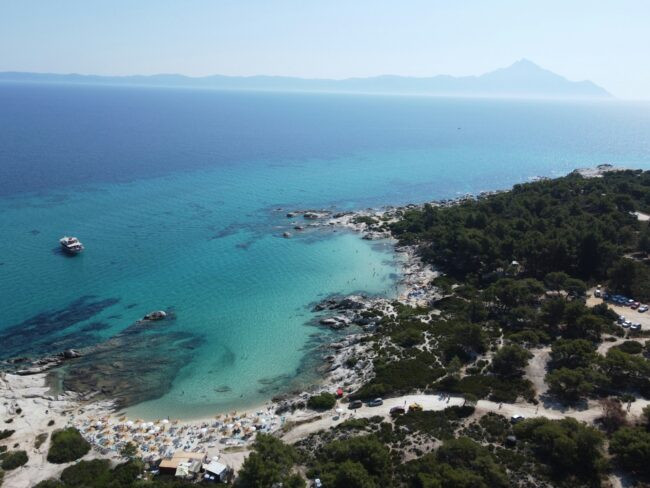
An enchanting beach on the Sithonia peninsula in the Macedonia region of northern Greece. The name means “crab holes,” and it perfectly describes the geography of the place: a series of small, hidden coves separated by smooth granite rocks and pine groves that reach right down to the water’s edge. The combination of deep green pines, white rocks, and the mesmerising turquoise sea creates the feel of a secluded island in the heart of the mainland.
Navagio Beach, Zakynthos (Shipwreck Beach)
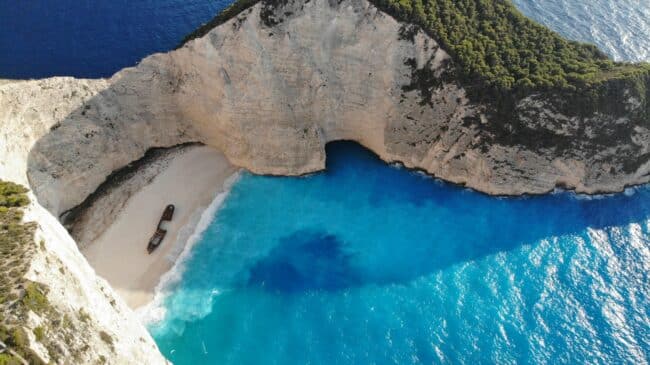
I’ll be honest — I went back and forth about whether to include this endlessly famous spot on the island of Zakynthos. In the end, I decided it is simply too iconic to leave out: it appears on virtually every “most beautiful beaches in Greece” list, and with good reason. The beach is enclosed by enormous vertical limestone cliffs rising hundreds of metres, and at its centre rest the rusting remains of a smuggler’s vessel that ran aground here in the 1980s.
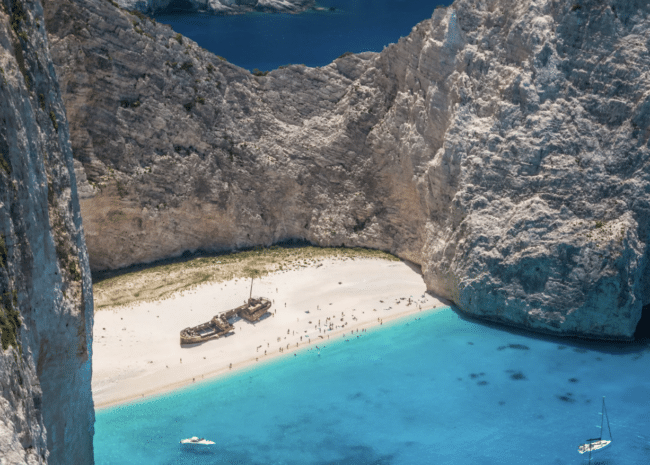
The contrast between the white cliffs, the pristine sand, the mysterious shipwreck, and the electric-blue water creates a scene that is impossible to forget — or to photograph only once. It is little wonder this is one of the most photographed locations in all of Greece.
Papa Nero Beach, Thessaly / Pelion
A long, wide stretch of beach on the magnificent Pelion peninsula, combining fine white sand with small smooth pebbles and lapped by perfectly clear Aegean waters. What makes this beach truly special is the dramatic way the green slopes and dense vegetation of Mount Pelion tumble directly down to meet the waterline. It is considered a genuine hidden gem among local travellers, who come for the extraordinary tranquillity, deep water, and unspoiled nature — along with a handful of excellent fish tavernas within easy walking distance.
Essential Tips for Enjoying Greece’s Beaches
To avoid overpriced tourist traps, look for beaches where small family-run tavernas have their menus written in Greek. If most of the people around you are speaking Greek, you’ve found the right place.
The peak summer months of July and August are the hottest and busiest, with temperatures that can climb above 35°C (95°F). June and September are the ideal months for beach visits — the water is warm, the crowds are thinner, and prices are more reasonable.
On the Aegean islands, always check the daily wind forecast. If a strong northerly meltemi is blowing, choose beaches on the southern side of the island for calm, wave-free swimming.
Many beaches in Greece are made up of pebbles, rocks, and occasionally sea urchins. Always pack water shoes and a good-quality snorkel — the clarity of Greek waters offers superb underwater visibility.
Some of the most famous beaches (such as Balos or Porto Katsiki) require a long and sometimes complex journey to reach. If you don’t have a hire car, check local bus schedules (KTEL) in advance, or look into daily boat tours departing from the main ports.