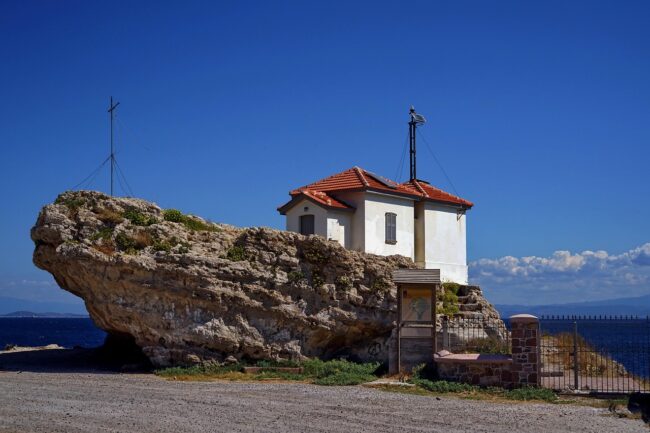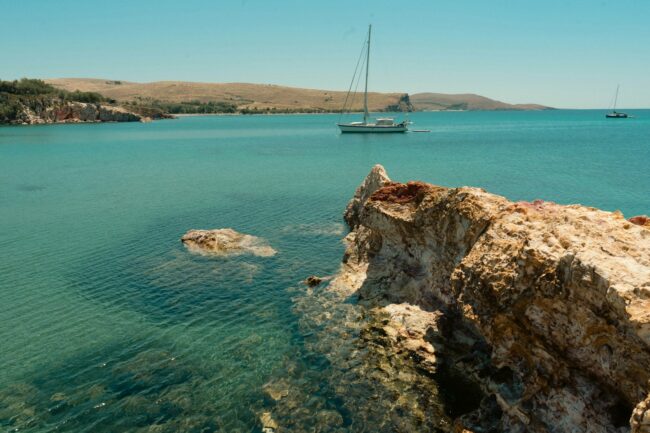

The island of Samothraki, part of the North Aegean island group, is considered one of the most captivating and untamed destinations in Greece. Unlike the famous Cycladic islands with their whitewashed houses and arid landscapes, Samothraki is an island of powerful contrasts.
Here you’ll find enormous granite cliffs rising straight out of the sea, dense oak and plane tree forests, and — most strikingly — hundreds of freshwater springs that cascade down through rushing waterfalls into natural pools known as “Vathres“.
The island is dominated by the Saos mountain range, whose highest summit, Fengari, rises to 1,611 metres. Legend has it that this is the peak from which Poseidon watched over the Trojan War.
The atmosphere on Samothraki is unlike that of any other island in Greece. This is an island that has preserved an authentic, raw, and faintly mysterious character. Tourism here is far from mass-market, and for most of the year the island draws nature lovers, backpackers, and travellers looking to disconnect from modern civilisation.
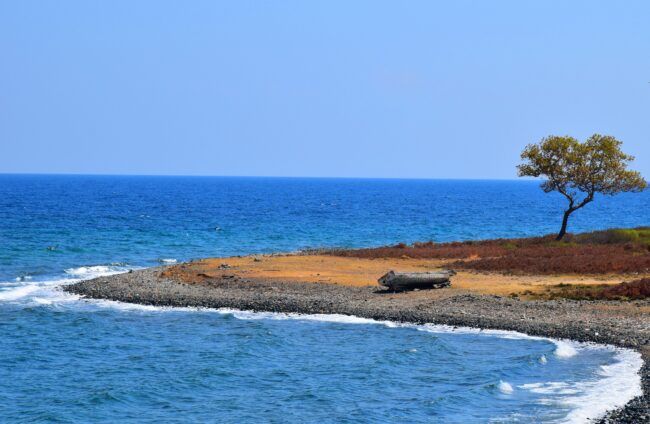
There are no sprawling hotels or organised beaches lined with rows of sun loungers — instead, you’ll find pristine shores, mountain villages frozen in time, and raw nature that overwhelms the senses. The combination of the ancient history of the “Sanctuary of the Great Gods” with the island’s unique natural phenomena creates a truly rare experience — an island that is a perfect blend of the spiritual and the physical.
Who Is Samothraki For?
For couples, Samothraki offers a different kind of romantic escape. The complete tranquillity and absence of tourist noise allow for genuine connection and intimacy within a breathtaking landscape.
The island is not suited to couples in search of ostentatious luxury, but rather to those who find magic in walking hand in hand through forests, bathing in secluded freshwater pools beneath waterfalls, and watching magnificent sunsets from Chora — the island’s capital, also known as Samothraki.
Adventurous families will find a vast natural playground on the island. Children and teenagers who enjoy physical activity will love scrambling over rocks to reach the waterfalls, swimming in the freshwater pools, and exploring the island’s wide-open beaches.
It’s worth noting that the island does require a degree of mobility and ideally a hire car, making it less suitable for families with prams or those seeking an all-inclusive style of holiday. It is, however, a genuinely educational destination that brings children face to face with ancient history and primordial nature.
Groups of friends — especially those passionate about hiking, climbing, and photography — will find Samothraki a perfect destination. The island offers challenging trails up to the Fengari summit and canyoning opportunities (including waterfall abseiling) along its various streams.
Groups are well catered for by the tavernas in the villages and the cafés in Chora, where the atmosphere is convivial and relaxed. This is an excellent spot for groups looking for shared adrenaline-fuelled adventures in nature, combined with simple Greek pleasures.
Independent travellers and backpackers are perhaps the audience most closely associated with this island. Samothraki is something of a magnet for Greece’s alternative travel community.
Independent travellers can take advantage of 2 organised campsites (authorities have tightened enforcement against unofficial camping in recent years), explore hidden corners of the forests, and meet like-minded travellers in the local cafés.
For dedicated nature lovers, the island offers the possibility of moving from stream to stream and sleeping under the stars (in designated areas), making it quite literally a dream come true.
The History and Character of Samothraki
The history of Samothraki is as rich and ancient as the rocks that form it. In antiquity, the island was renowned as an exceptionally important religious centre, owing to the Sanctuary of the Great Gods.
At this site, the Samothracian Mysteries were performed — secret religious rites that drew pilgrims from across the Hellenistic world. Among those pilgrims were notable historical figures such as Philip II of Macedon.
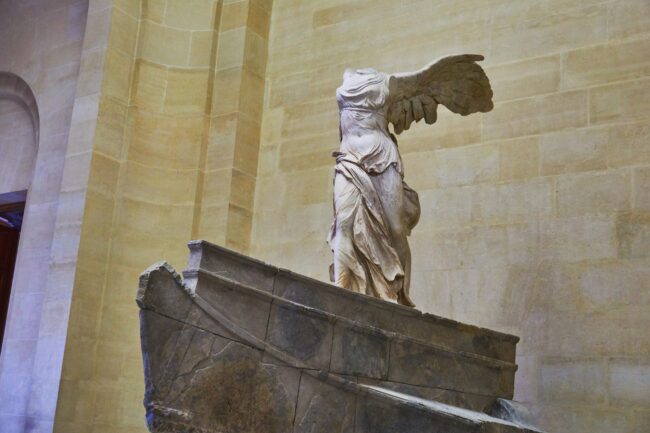
The most celebrated archaeological find associated with the island is the “Winged Victory of Samothrace” (Nike of Samothrace) — most likely a later version of a similar statue commemorating a naval victory near the island of Kos. The sculpture is now on display at the Louvre in Paris and stands as a timeless symbol of the island’s artistic greatness.
The island’s character is profoundly shaped by its relative geographical isolation and its wild winter weather, which has fostered in local residents a deep gratitude towards nature and a commitment to preserving agricultural and culinary traditions.
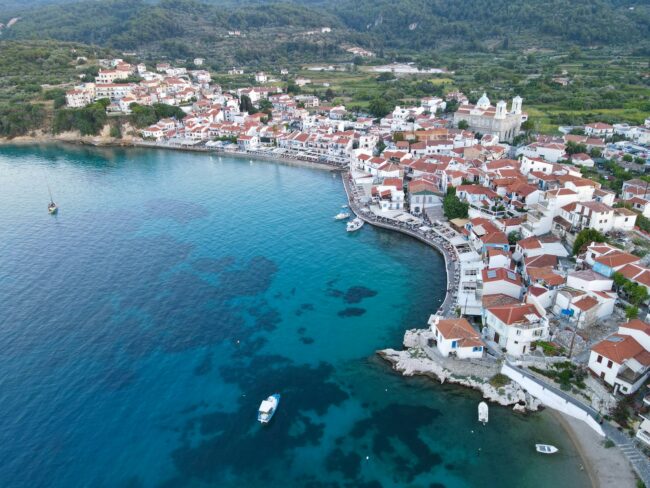
The architecture of Chora is defined by closely packed houses built in an amphitheatre arrangement on the hillside — designed in earlier times to protect residents from pirate raids and fierce winds.
The general atmosphere here is one of “time standing still,” largely because the rhythm of life is dictated by the flow of water in the streams and the changing of the seasons — giving visitors a rare and precious sense of complete freedom.
Accommodation in Samothraki (Hotels and Apartments)
Accommodation on Samothraki is concentrated in three main areas:
- The port area of Kamariotissa, which serves as the island’s logistical hub — making it an ideal base for those exploring the island by public transport.
- The island’s capital, Chora, which is characterised by a traditional atmosphere.
- The Therma area, popular with younger visitors and nature enthusiasts due to its proximity to the waterfalls. Not to be confused with places of the same name on Ikaria, Kos, Lesvos, or Kalymnos.
The dominant style across the island is small family-run hotels, simple self-catering apartments, and renovated stone houses. There are no five-star luxury hotels on Samothraki — which is precisely what keeps its modest, authentic character intact.
Most accommodation on the island is operated by locals who offer a warm and personal welcome. Booking in advance is recommended for the summer months (July–August), as supply is relatively limited given the strong domestic Greek tourist demand. Here are a few options:
- Samothraki Village Hotel — Located near the port, with a swimming pool and views over the Aegean. Well suited to families and those looking for modern comfort.
- Niki Beach Hotel — Situated right on the waterfront in Kamariotissa harbour, making it an excellent base for exploring the island.
- Archondissa Boutique Hotel — A boutique hotel in the Therma area, surrounded by lush vegetation and featuring stylishly designed rooms.
- Electra Suites — A modern, well-appointed suites hotel in a quiet location, offering a high degree of privacy and panoramic sea views.
- Aiolos Hotel (listed on Booking.com as Aeolos Hotel) — A pleasant, no-frills hotel close to the beaches and the port, well suited to travellers looking for good value.
- Samothraki Beach Boutique Hotel — A modern, stylishly designed boutique hotel perched on a hillside above Makrylies Beach. Considered one of the most upscale and refined properties on the island, featuring a large pool (100 m²), jacuzzis in select rooms, and stunning panoramic views over the Aegean. Ideal for those seeking a more indulgent stay at a higher standard.
Attractions and Things to Do in Samothraki
The undisputed highlight of Samothraki is the “Vathres” — the natural freshwater pools formed along the island’s streams. The most famous is the Fonias stream, where a green, shaded trail leads to the first waterfall.
It’s important to note that the first waterfall is easily accessible (45–60 minutes’ walk), but the second and third falls require a steep and challenging climb that is not suitable for everyone. Without appropriate equipment or climbing experience, attempting to reach these higher falls is considered dangerous.
The bold and the experienced press on to the higher waterfalls, where the pools are unusually deep and crystal clear. Bathing in the cool water at the heart of the forest is a purifying experience — a refreshing alternative to the saltwater beaches.
For archaeology enthusiasts, a visit to the Sanctuary of the Great Gods is an absolute must. The site radiates an atmosphere of ancient grandeur and offers a compelling insight into the island’s significance in the ancient world.
The site is located in a valley near the village of Paleopoli and includes the structures used for the Mystery rites, the spot where the Nike statue was discovered, and a nearby archaeological museum.
The village of Chora is an architectural gem not to be missed. Wandering through its steep, narrow lanes reveals small houses with terracotta roof tiles, studios and shops run by local artists, and cafés offering breath-taking views down to the port and the sea.
At the top of the village, the ruins of the castle provide a perfect vantage point for watching the sunset. In the evening, Chora takes on a truly magical quality as the lights come on and a cool breeze descends from the Saos mountains.
Those seeking physical relaxation will find it at the hot springs in the village of Therma. The mineral-rich waters, known for their therapeutic properties, can be enjoyed both in the municipal bathhouse and in the natural outdoor thermal pools.
Beaches in Samothraki
The beaches of Samothraki are varied, ranging from dark pebble shores to stretches of golden sand. Most are completely unorganised, so it’s advisable to come prepared with your own water and a parasol. Here are some options:
- Pachia Ammos Beach — The only sandy beach on the island and its most popular. Located in the south, it has parasols, sun loungers, and a taverna, and is easily accessible by car.
- Kipos Beach — A spacious beach of black pebbles with remarkably deep and clear water. Situated at the eastern end of the island’s coastal road, it offers complete tranquillity and a wild, untouched setting.
- Vatos Beach — A pristine and stunning beach accessible only by boat from the port or via a challenging hike. The water is turquoise and the surrounding cliffs are dramatic. Despite restrictions and enforcement, it is also a popular camping spot.
- Therma Beach — The main beach in the Therma area in the north of the island. A pebble beach surrounded by dense plane tree vegetation that reaches all the way down to the water’s edge.
Nightlife and Entertainment in Samothraki
The social scene on Samothraki is easy-going and bears no resemblance to large clubs or rowdy parties. Evening entertainment centres around the cafés and small bars in Chora and Therma.
The island’s crowd favours live music (often rebetiko or traditional Greek music), shared evenings over a glass of tsipouro or a local beer, and long conversations that stretch late into the night. Local cuisine centres on goat meat, considered the island’s signature delicacy. Here are a few recommendations:
- To Kastro — A bar-café situated beneath the castle in Chora, with panoramic views and a pleasantly relaxed atmosphere.
- Gefira Bar — A popular bar in the Therma area, set on a small bridge and known for its lively, youthful atmosphere under the trees.
- Trapeza — A traditional café in Chora where locals and travellers gather for backgammon and Greek coffee.
- Stenaki — A small, charming bar-café tucked into the narrow lanes of Chora. Styled in a bohemian aesthetic, it plays a mix of jazz, blues, and quality rock — making it the perfect spot for a cocktail or a local beer called Fonias.
Restaurants and Cuisine in Samothraki
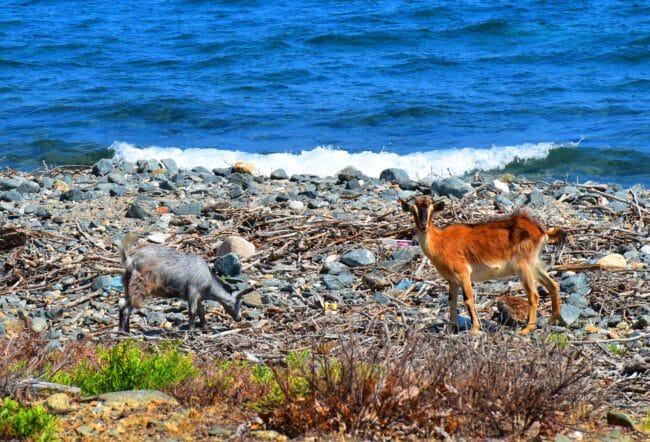
Food on Samothraki is a celebration of fresh ingredients from sea and mountain alike. The most celebrated dish is wood-oven roasted goat (Katsikaki), served on a spit or in a lemon sauce — a staple found on virtually every mountain taverna’s menu.
- Karydies — A restaurant in the village of Profitis Ilias (known locally as Provitis), widely regarded as the best place on the island for grilled meats in a rustic, village setting.
- Synantisi — A fish taverna in Kamariotissa harbour serving excellent fresh fish and seafood.
- Akrogiali — A restaurant right on the waterfront, serving a combination of classic Greek dishes and fresh fish.
- O Vrachos — A long-established family restaurant perched at a high point in Chora, directly beneath the Byzantine castle — making it one of the most romantic and beautiful spots on the island to dine at sunset. The restaurant specialises in traditional Greek cooking, with a focus on slow-cooked casserole dishes and grilled meats.
Getting to Samothraki and Getting Around
Reaching Samothraki requires a little planning, as the island has no airport. The most common route is to fly into Athens and then take a domestic flight to the city of Alexandroupolis. From Alexandroupolis port, daily ferries depart for Kamariotissa harbour on Samothraki. The crossing takes approximately two hours.
It’s also possible to fly into Kavala and then drive one hour to Alexandroupolis. There are occasionally ferries to Samothraki from Kavala port or from the nearby town of Keramoti, though the Alexandroupolis route is the most reliable.
Another option is to travel (by hire car or by bus) from Athens or Thessaloniki (the popular option, which takes around 3 hours) to Alexandroupolis, and then board a vehicle ferry.
Once on the island, hiring a car or motorbike is strongly recommended, as public transport is limited and does not reach all the remote beaches and streams. The island’s steep, mountainous terrain in the south and east means the main road circumnavigates a large part of the island but does not complete a full loop.
Essential Tips for Visitors to Samothraki
- The best time to visit is between June and September. July and August are the busiest months; June and September are considerably quieter. The island has a Mediterranean climate, but its high mountains mean sudden weather changes and even summer rain are possible.
- Good closed-toe walking shoes or water shoes with grippy rubber soles are essential for scrambling over rocks and walking through streams (flip-flops and open sandals are not recommended for in-water walking due to the risk of slipping). A head torch is also worth packing if you plan to be outdoors after dark.
- Prices on the island are very reasonable compared to popular tourist destinations such as Mykonos or Santorini, offering considerably better value for money.
- Travellers without a car are best placed in Therma or Kamariotissa to stay close to the island’s main points of interest.
Samothraki is an island for those in search of a different kind of Greece — unpolished, yet naturally photogenic and deeply rooted. The rare combination of soaring mountains, freshwater waterfalls, and a history shrouded in religious mystery makes it a truly extraordinary destination.
A visit here is suited to the adventurous, those who embrace an active holiday, and those willing to step off the beaten track — people who are ready to make the effort of a challenging climb in order to earn a plunge into a natural pool deep in the forest. If you value simplicity, silence, and authenticity, and your heart is open to new experiences, Samothraki is your Greek island.
מתוייג ב:
Guides