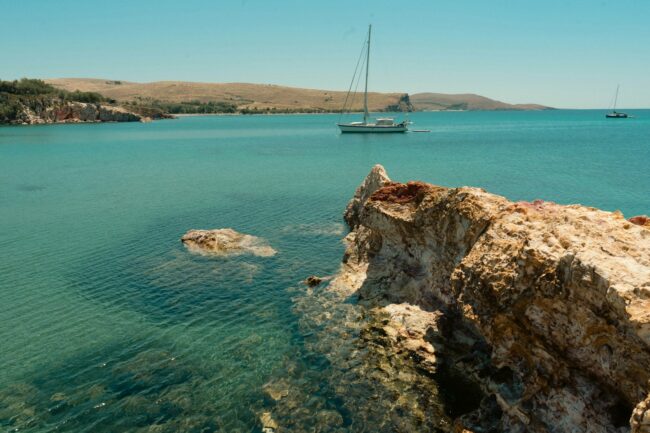

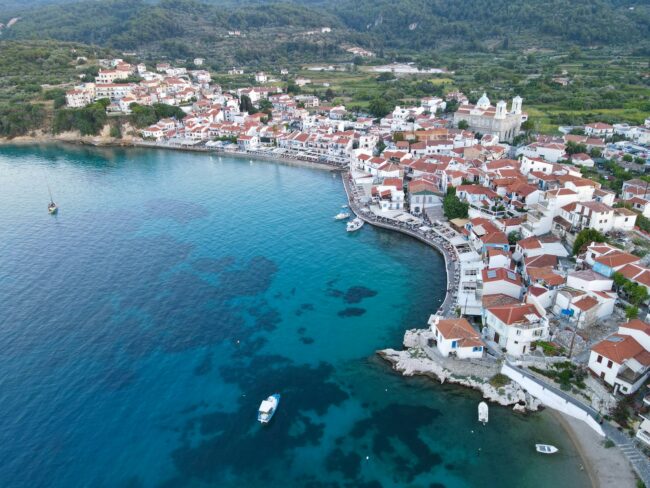
The island of Samos is one of the most fascinating and lush islands in the North Aegean island chain. Located in the eastern Aegean Sea, it sits just a stone’s throw from the Turkish coastline.
Unlike the arid Cyclades islands, Samos is blanketed in dense vegetation — pine forests that reach all the way down to the waterline, and olive groves and vineyards that carpet its steep mountain slopes.
The island is home to two UNESCO World Heritage Sites, a testament to its remarkable cultural significance throughout the centuries.
Samos strikes a rare and delicate balance: on one side, well-developed tourist hubs; on the other, secluded mountain villages where time seems to have stood still.
Across the island — particularly in the capital Samos Town and the settlements of Vathy (the historic old quarter of Samos Town), Pythagoreio, and Kokkari — visitors encounter impressive neoclassical architecture, picturesque harbours, and traditional tavernas.
This is a destination perfectly suited for those who want a holiday that blends sun-soaked relaxation on crystal-clear beaches with hiking through unspoiled nature, archaeological excursions, and tastings of the island’s celebrated Muscat wine.
Who Is Samos For?
Couples will find Samos a romantic destination offering both intimacy and breathtaking scenery. The village of Kokkari, with its narrow lanes and charming harbour, is widely regarded as one of the most sought-after spots for couples — celebrated for its spectacular sunsets and waterfront restaurants perched right at the water’s edge.
Couples can enjoy winery tours, swimming in hidden coves such as Seitani — accessible only on foot or by boat — and romantic evenings in historic Pythagoreio.
Families visiting the island will appreciate its calm, shallow beaches with gentle waters, particularly around Psili Ammos beach on the southern coast, where the fine sand and placid sea are ideal for young children. (Note: there is another beach of the same name near Marathokampos — not to be confused.)
The island also offers a range of educational activities such as visiting the Cave of Pythagoras and the archaeological museums, alongside more active pursuits like small water parks and water sports at organised beaches. The main towns feature wide, pram-friendly promenades, and there is a broad range of spacious family-oriented accommodation options available.
Groups of friends or travellers will find plenty to enjoy in Samos’s diverse nightlife and culinary scene. Samos is not a party island in the vein of Mykonos, but it does offer a quality after-dark experience — harbour-front bars and stylish beach clubs await.
Groups can charter a private boat for a day of sailing between the nearby small islands (especially Samiopoula), or head out on jeep tours through the mountains with stops at remote village tavernas serving generous portions of authentic local food.
Independent travellers and nature lovers will see Samos as a true paradise. The island is criss-crossed with marked hiking trails that wind through canyons, past waterfalls (such as the Karlovasi Falls, known to tourists as the Potami waterfalls), and up to mountain summits rising over 1,400 metres — including Mount Kerkis.
Independent travellers will also delight in visiting cliff-top monasteries, discovering the island’s rich endemic flora, and staying in traditional guesthouses in mountain villages such as Manolates.
The History and Character of Samos
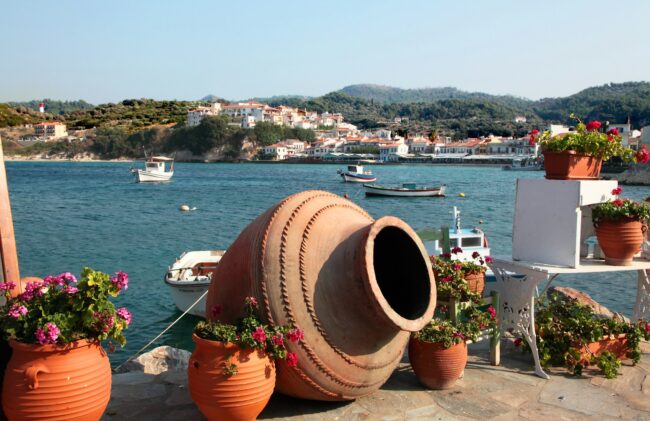
Samos has a rich history that reached its zenith in the 6th century BC under the rule of Polycrates. During that era, the island was a leading maritime and cultural power in the Greek world.
Samos is also the birthplace of some of history’s most towering figures: the philosopher and mathematician Pythagoras, the astronomer Aristarchus (the first to propose that the Earth orbits the Sun), and the philosopher Epicurus. The island was also an important centre of worship for the goddess Hera, and a temple dedicated to her still stands on the island today. According to mythology, she was also born on the banks of the Imbrasos river, which flows through Samos.
The character of the place reflects both its illustrious past and a long agricultural tradition. The people of Samos are known for their deep respect for the land — and in particular for the vineyards that produce the island’s celebrated Muscat wine, exported around the world.
The atmosphere on the island is one of local pride and quiet contentment — there is no sense of mass tourism here, but rather genuine Greek hospitality. The local way of life blends work at sea and in the vineyards with leisurely social gatherings in village squares, where locals can be seen lingering for hours over a Greek coffee or ouzo.
Accommodation in Samos (Hotels and Apartments)
Accommodation options in Samos are wonderfully varied — ranging from indulgent resorts with swimming pools and direct sea access to family-run studio apartments — spread across several key areas of the island.
In the island’s capital, Samos Town, you’ll find upscale neoclassical hotels and guesthouses, while Pythagoreio is the preferred base for those seeking proximity to historical sites and elegant nightlife.
Kokkari is hugely popular with beach lovers looking for a picturesque, village-style atmosphere. The western side of the island and the Karlovasi area offer quieter accommodation options at more affordable prices.
Most accommodation across the island features design touches that blend traditional elements — principally wood and stone. Booking in advance is strongly recommended, especially for July and August, when demand for quality properties is exceptionally high. Here are some recommended places to stay:
- Doryssa Seaside Resort — A luxurious five-star resort located in Pythagoreio. Designed to resemble a traditional Greek village, complete with a central square and chapel, it features a private beach, expansive pools, and a full-service spa. Ideal for couples and families seeking top-tier hospitality.
- Casa Cook Samos — An adults-only hotel near Pythagoreio styled in boho-chic design. It delivers a relaxed yet luxurious stay, with private plunge pools in select rooms and a strong focus on contemporary local cuisine.
- Arion Hotel — Perched on a hillside above the village of Kokkari, this property offers panoramic views over the Aegean. A welcoming family-run hotel with a large pool, beach shuttle service, and lush, peaceful surroundings.
- Proteas Blu Resort — A luxury adults-only resort nestled in a private bay near Pythagoreio. Defined by its elegant design, multiple gourmet restaurants, and stunning room views. Perfect for a honeymoon or a quiet romantic getaway.
- Sirena Residence & Spa — Located in the charming coastal village of Marathokampos in the southwest of the island. The property offers well-equipped apartments, an attractive pool, and spa facilities, making it an excellent choice for families or groups looking for a high-quality self-catering stay.
- Armonia Bay Hotel — A charming boutique hotel set above Tsamadou Beach. It features an infinity pool that appears to merge with the sea, and rooms styled in classic Greek design. The personal service and tranquil setting make it a true hidden gem.
- Samian Mare Hotel Suites & Spa — A modern suites hotel with a spa, swimming pool, and restaurant, situated in the coastal town of Karlovasi. With its clean contemporary design, it prioritises comfort and proximity to the sea. An excellent base for couples and young families who want a stylish, modern retreat close to the island’s famous hiking trails, tavernas, and shops — without sacrificing resort-style peace and quiet.
Attractions and Things to Do in Samos
Samos is rich in historical and natural sites that are hard to find elsewhere in the Greek islands. The most famous attraction is the Eupalinian Aqueduct — a remarkable feat of engineering from the 6th century BC. This underground water tunnel stretches nearly a kilometre, having been excavated simultaneously from both sides of the mountain with extraordinary precision. Walking through the narrow, challenging passage is a truly memorable experience.
Not far away stands the Heraion — the ruins of the vast temple dedicated to the goddess Hera. Once one of the largest temples in ancient Greece, it is now recognised as a UNESCO World Heritage Site.
Nature lovers won’t want to miss the Karlovasi Waterfalls. The trail to the falls winds through dense forest alongside a rushing stream, and at a certain point you’ll need to wade or swim through the water. Nearby stands the Church of Metamorfosis, considered the oldest still-standing church on the island. The area is also home to the stunning Potami Beach, renowned for its breathtaking sunsets.
For even more dramatic scenery, a hike to the villages of Manolates and Vourliotas is highly recommended. These villages cling to the slopes of Mount Ambelos (also known as Mount Karvounis), surrounded by vineyards and adorned with picturesque lanes, local art galleries, and tavernas offering panoramic sea views.
In the island’s capital, Vathy, a visit to the Archaeological Museum is a must — it houses the colossal Kouros statue, one of the largest and best-preserved sculptures from the Archaic period, standing an impressive five metres tall. In the historic old town (Ano Vathy), it’s well worth wandering among traditional houses with their distinctive red-tiled roofs and flower-filled courtyards.
On the other side of the island, near the village of Marathokampos, lies the Cave of Pythagoras, tucked into the slopes of Mount Kerkis. According to local tradition, this is where the philosopher sought refuge from the tyrant Polycrates. Be prepared for a short climb and 300 steep steps up — the reward is a spectacular view over the sea.
Those who make the ascent (and those who don’t) may wish to take home as a souvenir the famous Pythagorean Cup — the “Cup of Justice” — a clever vessel that drains itself completely if filled beyond a certain level.
For those keen on water activities, sailing from Pythagoreio or Kokkari to the nearby islet of Samiopoula is highly recommended — a small island with a sandy beach and exceptionally clear turquoise waters.
Samos is also renowned for its windsurfing and sailing conditions (especially on the northern coast around Kokkari), which draw wind sports enthusiasts from across the globe.
To round off a full day of exploration, a visit to the Samos Wine Museum in Vathy is a treat — here you can learn about the production of the island’s celebrated Muscat wines and enjoy a tasting.
Beaches in Samos
The beaches of Samos are wonderfully diverse — from wide sandy stretches to secluded pebble coves framed by green cliffs. The waters around the island are known for their clarity and deep turquoise hues. Here are some highlights:
- Psili Ammos — A shallow sandy beach on the eastern tip of the island, very close to the Turkish coast. The name means “fine sand” in Greek, and it lives up to it — this beach is simply perfect for families with young children.
- Tsamadou — One of the island’s most beautiful and well-known beaches, situated near Kokkari. A pebble beach with unusually clear water, its eastern end is the island’s only official nudist beach.
- Lemonakia — A small, picturesque cove close to Tsamadou. Fairly sheltered from the wind and offering a relaxed atmosphere with sun loungers and a local taverna.
- Potami — A wide and impressive beach in the northwest of the island near Karlovasi. Known for its unusual rock formations and magnificent sunsets, it is widely considered one of the most romantic beaches on Samos.
- Livadaki — A hidden beach tucked inside a narrow, deep bay in the north of the island. Access is a little challenging via a dirt track, but the effort is rewarded with calm, shallow waters that feel like a natural swimming pool.
- Mikali — A long beach of white pebbles in the south of the island. The water here is exceptionally clean and the beach is less crowded than others, making it ideal for those seeking tranquillity and space.
Nightlife and Entertainment in Samos
The entertainment scene in Samos is a blend of Mediterranean ease with modern touches. In the main towns and coastal villages, the evening typically begins with a long, leisurely dinner at a local taverna before moving on to the harbour-front bars.
Music in the tavernas ranges from international hits to contemporary and traditional Greek sounds, and locals love to socialise and enjoy the good life. The atmosphere is always warm and welcoming.
- Gregory’s Bar — A hugely popular bar in the harbour of Pythagoreio, known for its excellent cocktails and lively atmosphere throughout the evening. The highlight is the view over the yachts moored in the harbour.
- Solid — A club and bar in Vathy (Samos Town) that draws a younger crowd. It regularly hosts DJs and keeps the party going well into the night.
- Navagos Beach Bar — A beach bar on Tsamadou beach. By day it offers sun loungers and chilled-out music; by late evening it transforms into a hub for beach parties and open-air events under the stars.
- Boa Vista — A stylish cocktail bar perched on a hillside above Vathy. Widely considered one of the finest viewpoints on the island, especially at sunset, it creates an irresistibly romantic atmosphere. The design is modern and refined, the cocktail menu is creative and carefully crafted, there is a good selection of local wines, and the music shifts from relaxed chill-out sounds early in the evening to something more upbeat as the night progresses.
Restaurants and Cuisine in Samos
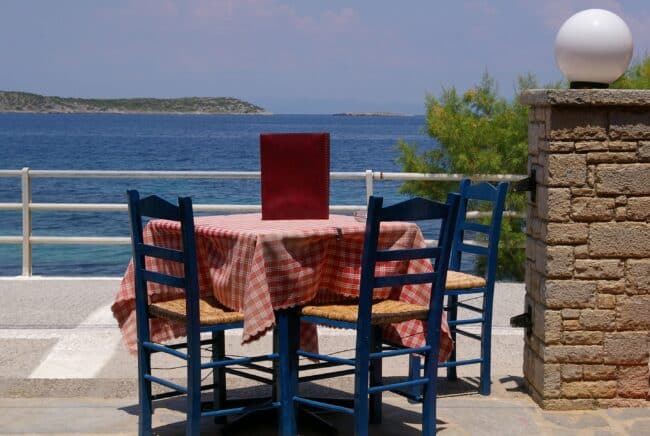
Samian cuisine is built on fresh, locally sourced ingredients: fine olive oil, local honey (considered among the best in Greece and a popular souvenir), distinctive cheeses, and celebrated wines. Signature dishes include “xynomizithra” (a tangy local curd cheese) and freshly caught seafood, hauled in daily by the island’s fishermen.
- The Garden — A restaurant set within a beautiful garden in the heart of Pythagoreio. It serves modern Greek cuisine with a creative touch and a strong emphasis on local produce. The atmosphere is upscale yet warm.
- Meltemi — A family-run restaurant on Potami beach near Karlovasi. Famous for its stunning views at sunset and its meat and fish dishes prepared according to time-honoured family recipes passed down through generations.
- AAA (Three A) — A traditional taverna in the mountain village of Manolates. This is the place to try authentic village cooking with a view of the mountains and the sea — hearty slow-cooked dishes and wines from the surrounding vineyards.
- Orizontas — A chef’s restaurant in the mountain village of Platanos, on the slopes of Mount Ambelos. Regarded as one of the island’s finest, it pairs traditional Greek cooking with a refined modern sensibility. Arrive before sunset to enjoy the view over the vineyards and the sea from the terrace.
Getting to Samos and Getting Around
By Air
Samos has an international airport named “Aristarchos.” During the tourist season (April to October), there are direct charter flights from many European cities, and occasional direct services from further afield.
Year-round, scheduled domestic flights operate to Samos from Athens and Thessaloniki. The flight from Athens takes approximately 45 minutes, and from Thessaloniki around one hour.
By Ferry
Samos is well-connected to Greece’s ferry network, with Vathy and Karlovasi serving as the island’s main ports. Ferry services operate from several destinations:
- Piraeus Port (Athens) — 8 to 12 hours, depending on the vessel
- Chios — 2.5 to 3.5 hours
- Lesvos — 6 to 7 hours
- Ikaria — 1.5 to 2.5 hours
- The Dodecanese islands — from as little as one hour from Patmos to around 9 hours from Rhodes
There are also daily short ferry crossings (approximately 45 minutes) between Pythagoreio or Vathy and the Turkish town of Kuşadası.
Getting Around the Island
Samos is a sizeable island, and the best way to explore it is by hire car or motorbike. The main roads are in good condition, though routes to the mountain villages can be winding and narrow.
A public bus network (KTEL) connects the main towns and popular beaches, though services can be infrequent at weekends and in less touristy areas. Taxis are available in the towns and at the ports, though fares for longer journeys can be relatively high.
Essential Tips for Visitors to Samos
- Best time to visit: The optimal period to visit Samos is from May to October. June and September are the ideal months for travellers seeking pleasant weather (around 25–28°C / 77–82°F) and fewer crowds. July and August are hotter (above 30°C / 86°F) and much busier.
- Climate: The island is exceptionally green thanks to generous winter rainfall. In summer, the meltemi wind can offer welcome relief from the heat, though it may also stir up waves on the northern beaches.
- Gear: If you plan to visit the Karlovasi Waterfalls or more secluded beaches, pack sturdy walking shoes and water shoes (for the pebble beaches and stream walking).
- Value for money: Samos is considered excellent value compared to better-known islands. Food and accommodation are noticeably more affordable than on islands such as Santorini or Mykonos.
- Tip for those without a car: Basing yourself in Pythagoreio or Samos Town offers the best access to public transport and organised tours.
Samos is a destination that offers a complete and richly layered Greek experience — lush nature, ancient history, and exceptional local cuisine. It is an island for those who want depth in their travels: archaeology enthusiasts, keen hikers, families in search of safe and beautiful beaches, and couples seeking a romantic, unhurried retreat. The combination of excellent tourist infrastructure and genuine local authenticity makes Samos something truly special — one of the most distinctive and rewarding islands in the Aegean Sea.
מתוייג ב:
Guides