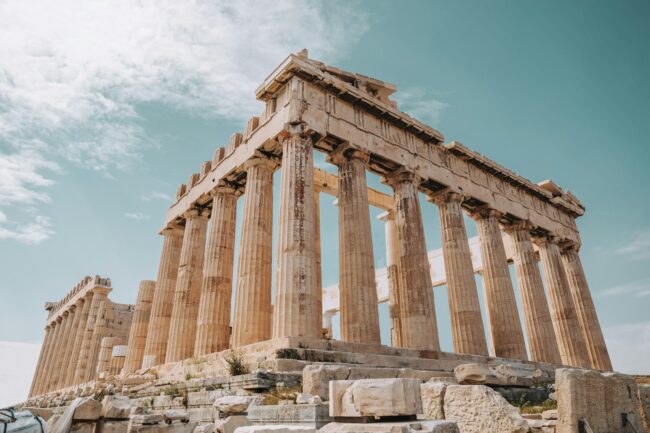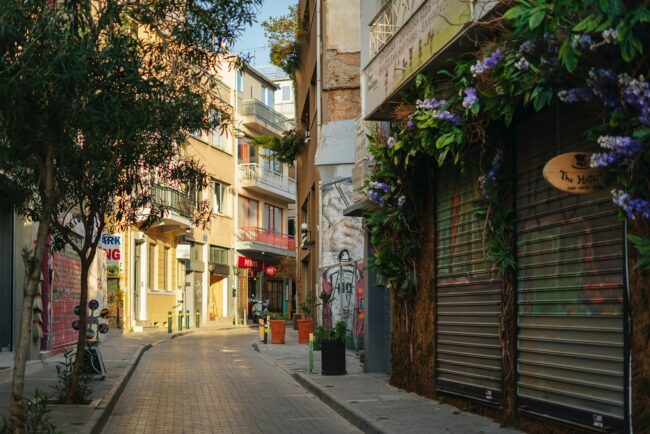

Philopappos Hill is one of the most pleasant corners of Athens. It is an open, green area-an urban space where nature stretches from end to end, dotted with stone paths, ancient rocks, and sweeping views. Despite its proximity to the city center, the atmosphere here is entirely different from the historic downtown. Here, there are no queues, no tickets, and no aggressive signage. Instead, there is slow walking, long gazes, and plenty of nature and fresh air overlooking the Acropolis.
General and Expanded Description of the Area
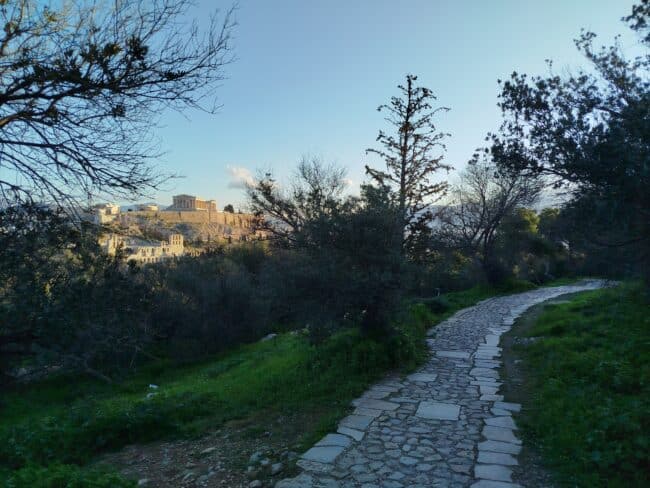
The hill is located southwest of the Acropolis, between the neighborhoods of Koukaki, Thiseio, and Petralona. It is a rocky hill standing about 147 meters above sea level, covered with pine trees, olive trees, and low Mediterranean vegetation. The entire area is designated as an open public park, and walking through it is done on a network of stone-paved paths that blend seamlessly into the natural topography.
The atmosphere is quiet, local, and not overly touristy, making it especially suitable for those looking for the off-the-beaten-path Athens. The light and wind change according to the seasons and the time of day, and it is particularly beautiful around sunrise and sunset.
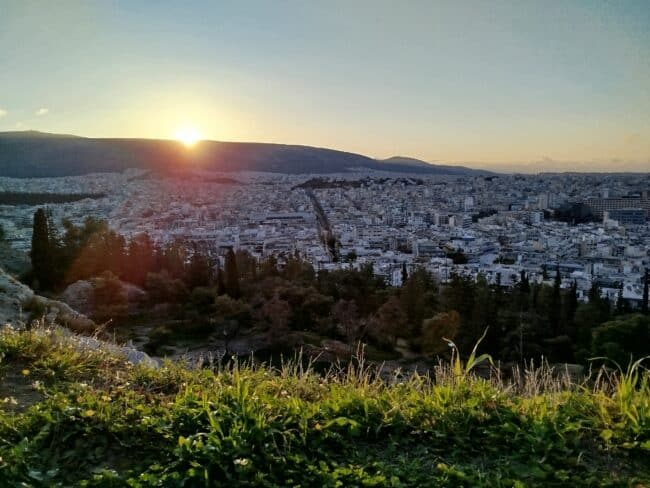
Couples will find an intimate space for walking together, with multiple sunset viewpoints and pleasant spots to sit on a rock or a stone bench facing the city. It is one of the most romantic places in Athens, precisely because of its simplicity and spaciousness.
Families with relatively older children can enjoy an easy walk in urban nature, short stops, and explanations about philosophy, history, and the landscape. The trails are comfortable but are not suitable for strollers.
Tour groups will enjoy the location as a relaxing stop between major sites, or as a starting point for a walking tour connecting the Acropolis, Koukaki, and Thiseio.
Independent travelers and urban nature enthusiasts will find this an ideal spot for unplanned walks, reading, photography, and less predictable viewpoints of Athens.
History and Character of the Hill
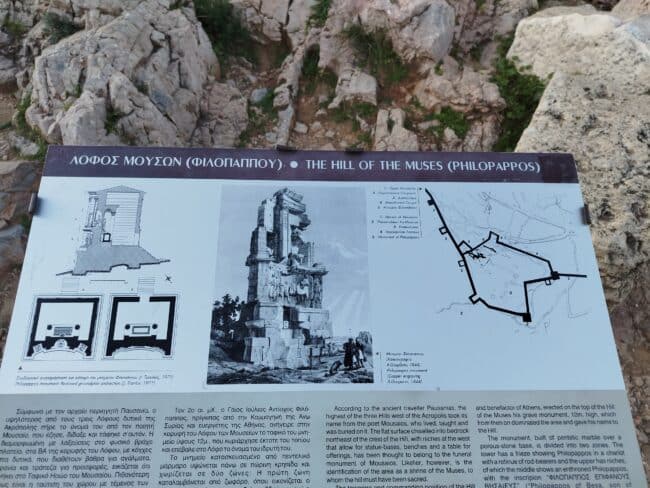
The hill’s name is derived from a prince of Syrian descent who lived in the second century CE and became an Athenian citizen. After his death, an impressive burial monument was erected in his honor at the top of the hill, becoming one of the most prominent landmarks in the southern landscape of the Acropolis. However, the history of the site begins much earlier, as the area was already identified in ancient times with the worship of the Muses, which is also the hill’s beautiful alternative name: Hill of the Muses.
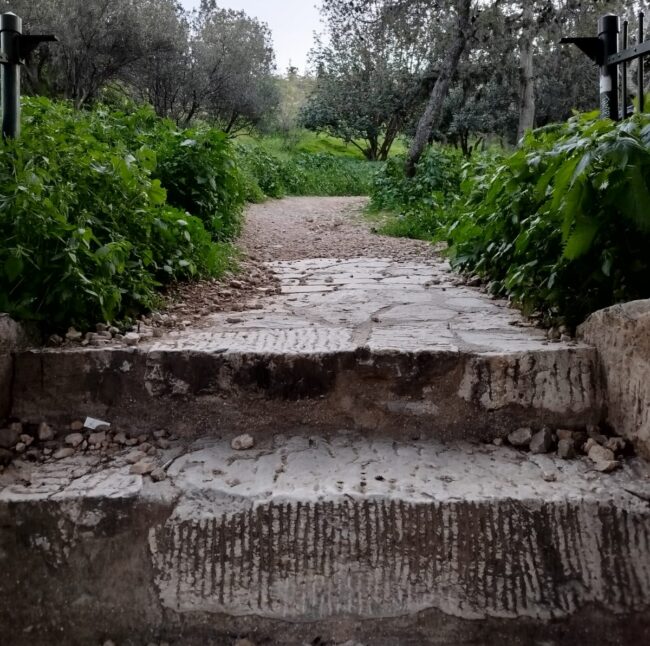
During the Byzantine and Ottoman periods, the area was sparsely populated, and in the 20th century, it underwent a process of conservation and redesign. The architect Dimitris Pikionis designed the paths and public spaces with a unique approach, using ancient stones, building fragments, and an intentional blend of nature, the past, and modern architecture. The character of the place has remained informal, open, and local to this day.
Attractions and Things to Do in the Area
Walking on Philopappos Hill is the main attraction here. The paths wind between rocks, trees, and natural openings to the landscape, and every turn reveals a new angle of the Acropolis, the lower city, or the Aegean Sea on clear days. It is a walk that does not require a clear destination but allows for free movement with spontaneous stops.
Philopappos Monument
At the top of the hill is the Philopappos Monument, an impressive stone structure from the second century CE, which serves as an exceptionally wide viewpoint.
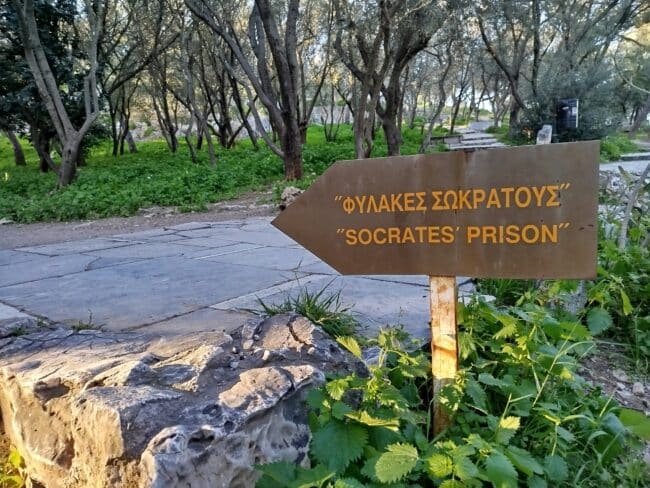
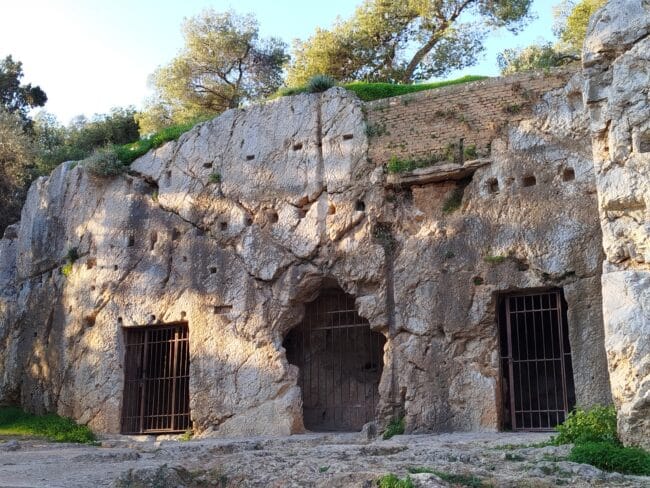
On the slopes of the hill, on its eastern side, is Socrates’ Prison, a system of caves carved into the rock that local tradition identifies as the place where Socrates was imprisoned before his execution. Although there is no absolute historical certainty, the site generates a lot of interest and serves as a quiet stopping point for thought and reflection.
Church of Agios Dimitrios Loumbardiaris
Right next to Socrates’ Prison is Agios Dimitrios Loumbardiaris. This is a small and unique Byzantine church from the 16th century.
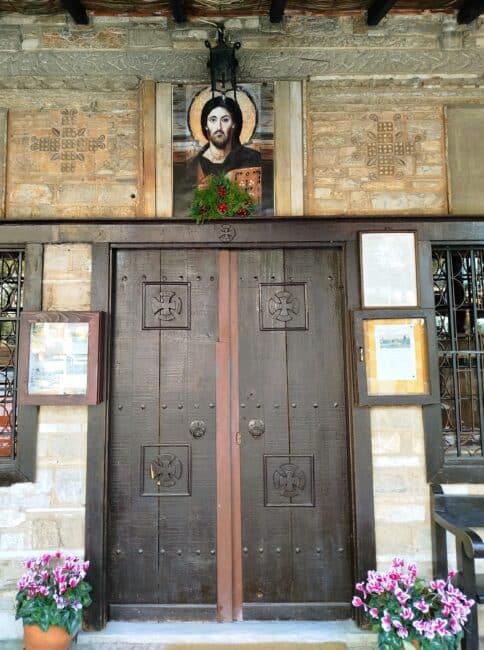
It is surrounded by trees and paths, combining a modest structure with Pikionis’ meticulous conservation work. The church is still active today and serves as an intimate local place of worship. You can attend the Sunday mass, and the prayer schedule and hours are posted on site.
Transportation and Arrival
The most convenient way to arrive is on foot from the Koukaki or Thiseio neighborhoods. Nearby metro stations include Syngrou-Fix (Line 2) and Thissio (Line 1). The average walking time from the stations is 10–15 minutes. There is no need for a car, and the entire area is pedestrian-friendly.
The recommended time to visit is early morning or towards sunset. In the summer, it is advisable to bring water and a hat, as some of the paths are exposed to the sun. Comfortable shoes are important due to the stones and slight inclines. The site is open year-round and is free of charge.
מתוייג ב:
Attractions | Rustic | Urban