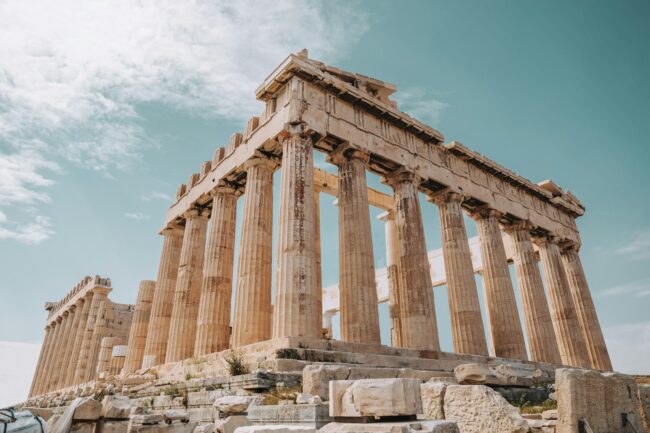

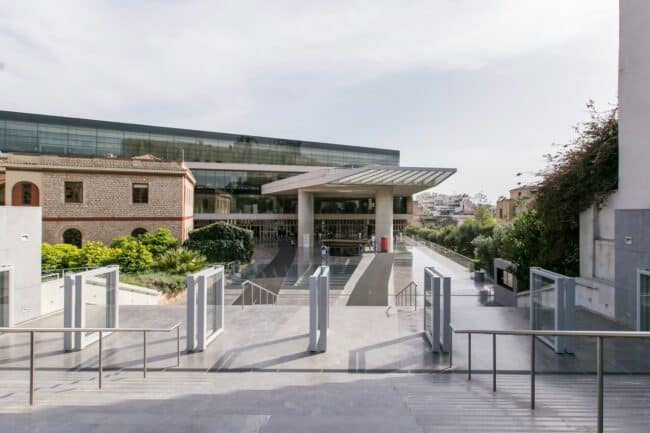
The Acropolis Museum is one of the most important archaeological museums not only in Greece, but in all of Europe. It is not a random collection of artifacts, but a historical center designed from the outset to accompany a visit to the Acropolis itself and complete the experience. This is an urban, modern museum, open to light and the surrounding landscape, located at the foot of the sacred hill of Athens, maintaining an ongoing dialogue with the Parthenon above it.
The experience here is different from visiting closed, heavy classical museums. The spaces are wide, natural light bathes the statues, and walking through the halls flows as a clear narrative sequence—from the early settlement, through the golden age of classical Athens, all the way to contemporary questions of identity, preservation, and the repatriation of Greek cultural heritage.
General and Extended Description of the Museum
The museum is located just about 300 meters from the southern entrance to the Acropolis. Its location is no coincidence: the building stands over a layer of archaeological excavations, visible through glass floors, demonstrating from the very first step that the past here is not just an exhibit—it is part of the ground itself.
The architecture is modern, clean, and minimalist, with extensive use of glass and light concrete. The floors are arranged so that the visitor ascends gradually, much like the climb up to the Acropolis, culminating in the Parthenon Gallery on the top floor—a space precisely angled toward the temple itself.
The atmosphere is serious yet accessible. It is a museum that speaks even to those who are not archaeology experts, without compromising on depth, accuracy, and respect for history.
Couples will find a quiet and focused cultural experience here, with a pace suited for a slow visit, lingering in front of statues, and enjoying impressive views of the Acropolis through giant windows. The visit blends perfectly into a relaxed urban day out, especially in the late afternoon. Families with older children will discover a straightforward, well-lit museum that isn’t overly burdened with texts. The models, reliefs, and sculptures generate interest even without in-depth reading, and there is a constant sense of movement that prevents museum fatigue.
Organized groups benefit from a logical layout that is easy to guide, featuring a clear route and spacious halls that allow for stops and explanations. Licensed guides operate on-site, and a guided tour can easily be integrated into a broader visit to the Acropolis area. Independent travelers, history buffs, or architecture enthusiasts will find this a place that rewards curiosity. The precise signage, English translations, and direct visual connection to the landscape outside the museum allow for a profound independent visit without the need for a dedicated guide.
History and Character of the Place
The idea of establishing a dedicated museum for the Acropolis was raised as early as the second half of the 20th century, but it wasn’t until the early 2000s that conditions were ripe for its realization. One of the main motivations was the need to display the Parthenon sculptures in modern conditions, as well as to strengthen the Greek demand for the return of the Parthenon marbles currently housed in the British Museum in London.
The museum opened to the public in 2009, following a long planning and construction process that included an international architectural competition and extensive archaeological excavations on the site itself. Since its opening, it has become one of the most visited sites in Athens and a symbol of a contemporary approach to classical archaeology.
The character of the place combines respect for tradition with a modern perspective. There is no attempt to romantically reconstruct the past, but rather to present it in a clear, research-based, and open manner, while constantly connecting it to the urban and scenic context in which it is situated.
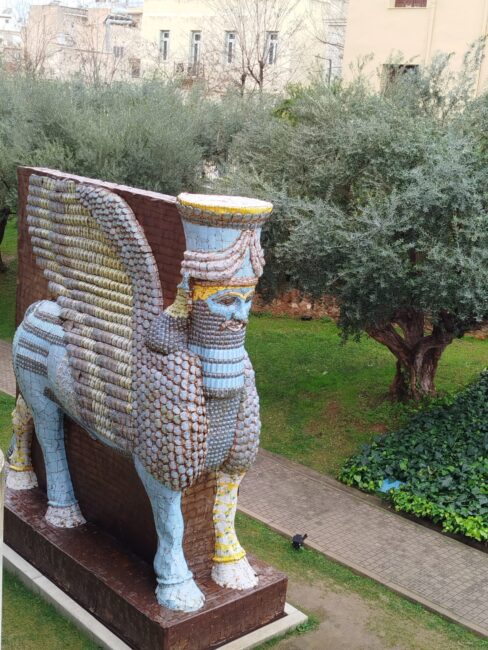
For example, this is evident in the statue located in the museum’s garden. It is not distinctly Greek but rather a replica of a Lamassu, a mythological Assyrian figure from the ancient Near East, combining a winged bull’s body with a human head wearing a royal crown.
Its presence here is no accident: it highlights the dialogue between the cultures of the Mediterranean and the ancient Near East. Thus, even before entering the museum itself, a reminder is set that the Greek world did not develop in a vacuum, but within a vast network of mutual influences.
What Will You Find in the Museum?
The visit begins on the ground floor, suspended above the archaeological excavations, where you can see the remains of an ancient residential neighborhood that operated at the foot of the Acropolis. The glass floors allow a direct look at houses, streets, and facilities from the Roman and Byzantine periods, creating a sense of continuity between the ancient city and the modern one.
On the middle floors, artifacts from the Archaic and Classical Acropolis are displayed: Korai and Kouros statues, reliefs, temple fragments, and ritual items. The way the statues are placed in the space, without closed showcases, allows for a close look at the details, original color traces, and restorations of the ravages of time.
The highlight is the Parthenon Gallery on the top floor. This is a long, brightly lit space where the reliefs of the Parthenon frieze are displayed in an arrangement parallel to their original placement on the temple. Some of the reliefs are original, some are replicas, and the difference between them is clearly marked—a choice that illustrates both what is missing and what has survived.
Beyond the permanent exhibition, the museum hosts temporary exhibitions, lectures, and special evening tours. One of the most unique experiences is a nighttime visit, when the Acropolis is illuminated and the connection between the exhibits and the external landscape gains added depth.
Open Days and Free Admission
- The museum participates in national initiatives for free entry to cultural sites. Free admission is available on the following days:
- March 6th
- April 18th
- May 18th
- The last weekend of September during European Heritage Days
- October 28th
- Tickets
- More information: here.
Additionally, during the winter season, between November and March, there are sometimes discounted opening hours or special evenings with free or reduced-price admission. It is recommended to check the museum’s official event calendar and announcements closer to your visit.
Transportation and Arrival
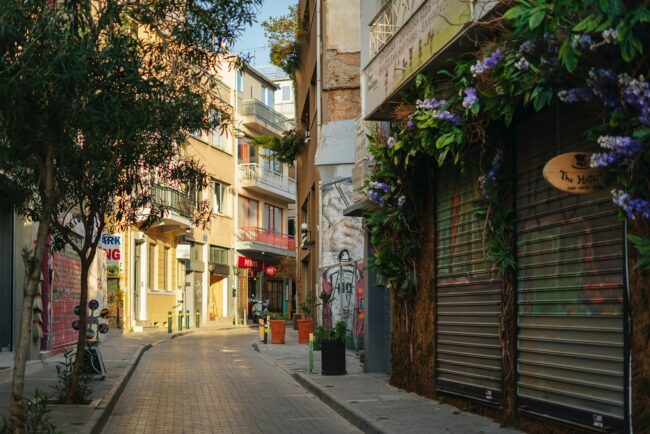
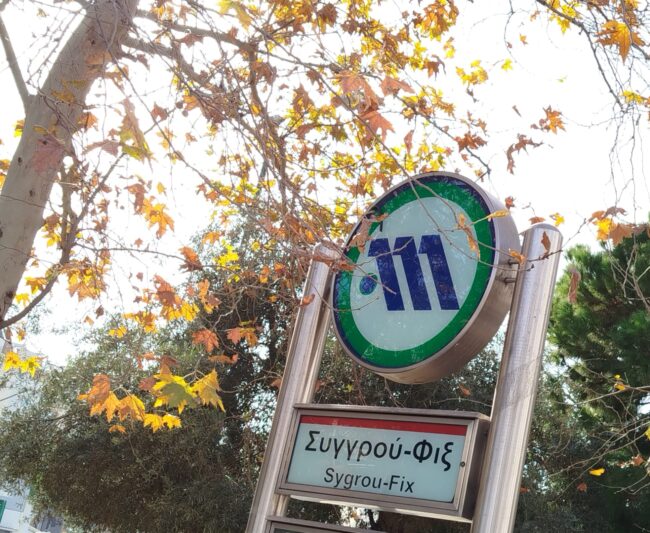
Getting to the museum is simple and convenient. The closest metro station is Acropoli (Line 2 – Red), located just about 150 meters from the entrance. Syngrou-Fix station is also a short walk away. Walking from the Acropolis, Plaka, or Koukaki is very pleasant, and the entire area is pedestrian-friendly. There is no need for a private car, and parking in the area is limited anyway.
Important Tips for Your Visit
It is recommended to dedicate at least two hours to the museum, and even three for an in-depth visit. Early mornings or late afternoons are more pleasant, especially in the summer when temperatures in Athens reach 30 degrees Celsius or more. It is advisable to combine the visit before or after climbing the Acropolis itself, but not right at the same moment of physical exertion.
The museum is well air-conditioned, providing a pleasant respite on hot days. Photography is allowed in most halls. Backpacks must be stored in lockers at the entrance. There are luggage storage services in Athens.
The Acropolis Museum is not a marginal addition to a visit to Athens; it is a key to understanding it. It allows you to see the Acropolis not merely as impressive ruins, but as a living, breathing cultural, artistic, and political complex. It is a place suited for those seeking depth, context, and meaning, and it succeeds in delivering this without being overly heavy or unnecessarily pathetic.
מתוייג ב:
Attractions | Urban