

Thanks to Greece’s diverse geography, the country is considered a paradise among trekking enthusiasts, offering an abundance of hiking trails. Here are the must-visit destinations on foot and practical tips for an eco-friendly trip.
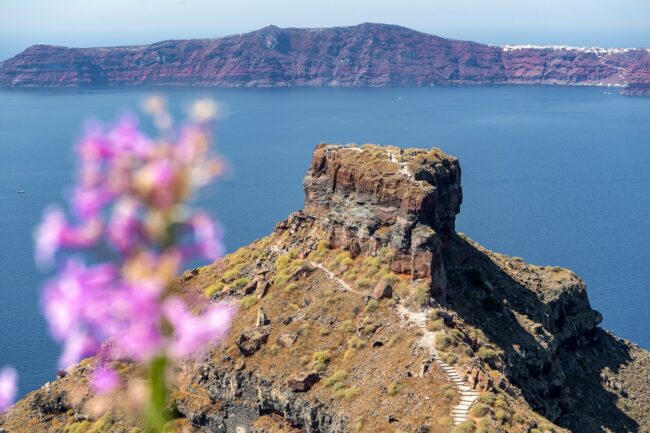
Trekking in National Parks in Mainland Greece
Mainland Greece is home to several national parks, each with its own unique characteristics in terms of difficulty levels and terrain—allowing for an extraordinary wealth of hiking routes.
The diversity is also reflected in the nature of the trails (from circular routes to multi-day treks), the marking infrastructure (from meticulous signage as part of the European trail network to unmarked off-road paths), and the varying landscapes sometimes found within the same national park.
In fact, every day of walking in Greece not only looks different from the day before but also feels completely different. Here are a few examples:
- Parnassus National Park, located in Central Greece, attracts cyclists and nature lovers. Not only because it rises to an altitude of 2457 meters (allowing for an alpine experience) but also because of the Delphi archaeological site at its foot—adding significant cultural value to the visit.
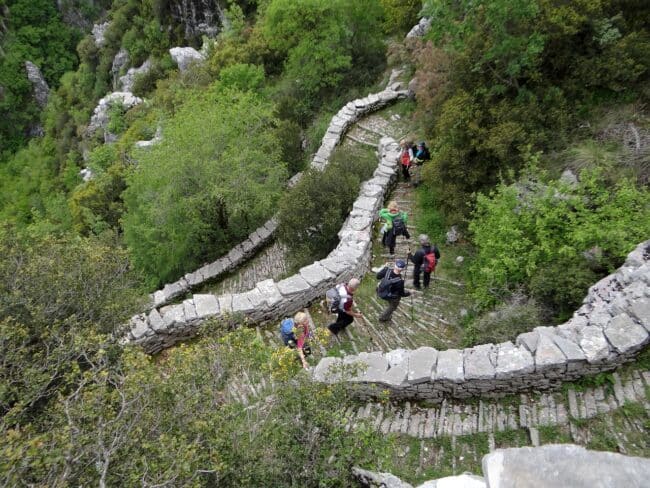
- The Vikos-Aoos National Park in Epirus (Northwestern Greece) is characterized by dramatic canyons, spectacular lakes (some being Drakolimni—alpine “dragon lakes”), and picturesque villages. The park includes the Vikos Gorge, considered a must-visit site and listed in the Guinness World Records as the deepest canyon in the world in proportion to its width.
Trekking in the Greek Islands
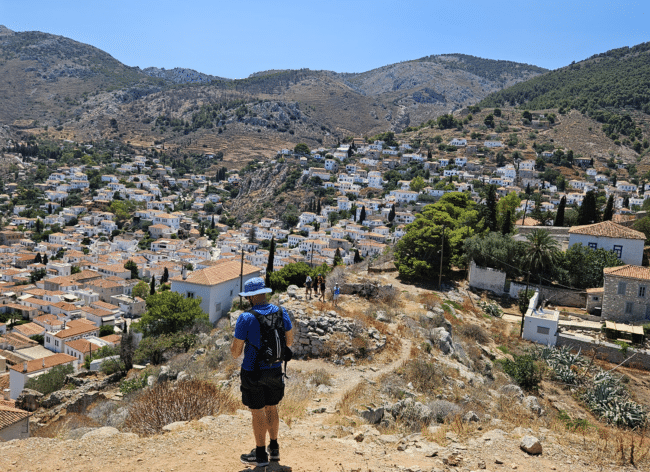
For travelers seeking to disconnect from the classic tourist bustle, the Greek islands represent one of the most fascinating arenas in the world for trekking and hiking.
Walking tours in the Greek islands combine physical effort with cultural and culinary rewards, as most trails typically end at a local tavern or a secluded bay accessible only on foot.
Hiking in the islands has an atmosphere of slow discovery, where the pace is dictated by steps rather than a clock—enabling a deep connection to wild nature and the tradition of Greek hospitality.
The Greek islands are crisscrossed with paths (natural stone ways or dirt roads) that served for centuries as the only transportation arteries between isolated villages, monasteries, and ports, making them a living historical testimony to the islanders’ lifestyle over thousands of years. Here are some examples:
- Ainos National Park on Kefalonia Island allows visitors to experience stunning views of pristine beaches, engage in stargazing, and encounter a wide variety of wildlife, such as the local fir species Abies Cephalonica and semi-wild horses.
- On the Island of Crete, the Samaria Gorge features incredible landscapes, ancient ruins, and a stunning diversity of flora and fauna.
- The island of Evia is the second-largest Greek island, and its highest peak is Mount Dirfi—making the island and the mountain popular destinations for hiking and mountain biking. The island also includes the Steni nature reserve with forests of various trees (plane, chestnut, fir, and oak), beautiful ravines, rivers, and streams, as well as the Demosari Canyon, one of the oldest hiking trails in all of Greece.
Specific Hiking Trails in Greece
In Greece, there are routes that connect the hiking experience with added value, for example:
- Wine Routes in Naoussa and North Macedonia (North Central Greece): The Naoussa region is famous for the “Xinomavro” grape variety. There are paths passing through historic wineries where you can combine an easy walk with wine tasting and visits to wine museums.
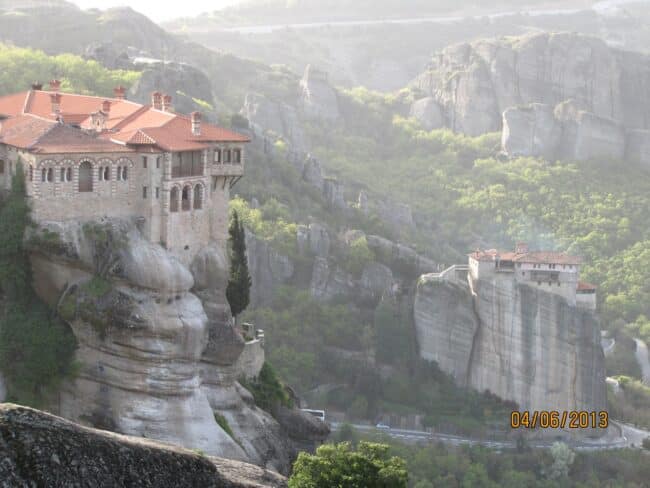
- The Monastery Trail in Meteora: A premier cultural-religious route on an ancient network of paths used by monks. Walking among the giant cliffs toward the monasteries is considered a powerful spiritual experience.
- The Byzantine Roads Trail in Naxos: A cultural trek connecting dozens of small Byzantine churches featuring rare frescoes.
- The Path of Peace on Olympus: A route connecting mythological sites with Christian places of worship, reflecting the transition from paganism to Christianity.
National and European Hiking Trails
Greece is part of the European trail network and also offers interesting national trails, for example:
- The E4 European long-distance path crosses all of mainland Greece from the north, passes through the Peloponnese, and crosses Crete from west to east. The Cretan segment is considered one of the most beautiful and challenging in Europe.
- The E6 European long-distance path crosses Greece from the west, passing through Epirus, Macedonia, and Thrace up to the Turkish border.
Another European route is the Via Egnatia. This is a historic-cultural route along the ancient Roman road between Istanbul and the Adriatic Sea, connecting Greece to its Balkan neighbors. Parts of the route in Thrace (Northeastern Greece) and Macedonia (North Central Greece) have been renovated and are available for treks combining history and Balkan scenery.
Another international walking option exists in the Rhodope Mountain Range trek, a range shared by Greece and Bulgaria. The trek crosses both sides of the border in a distinct Balkan atmosphere: small villages where time has stood still, plenty of running water, wildlife, and pristine forests that are among the few in Europe with centuries-old fir and pine trees.
National trails in Greece also offer plenty of options. For instance, the Epirus Trail connects the Pindus mountains over 370 km—making it the longest trek in the country. This trail is part of the Pindus Mountain route that starts in Albania and stretches for about 500 km.
Tips for Travelers in Greece
- Always stick to marked trails.
- Respect protected areas to avoid damaging sensitive ecosystems.
- Use reusable items (bottles, cups, etc.) to reduce waste and minimize your carbon footprint.
- Support local communities by choosing family-run accommodations and dining at traditional taverns.
The beauty of Greece, its rich history, and the warm hospitality found everywhere in the country make it an ideal destination for an unforgettable vacation. By embracing sustainable tourism practices and respecting the environment, you can enjoy the best of all worlds: scenery, enjoyment, sport, and a positive impact on local communities and nature.