
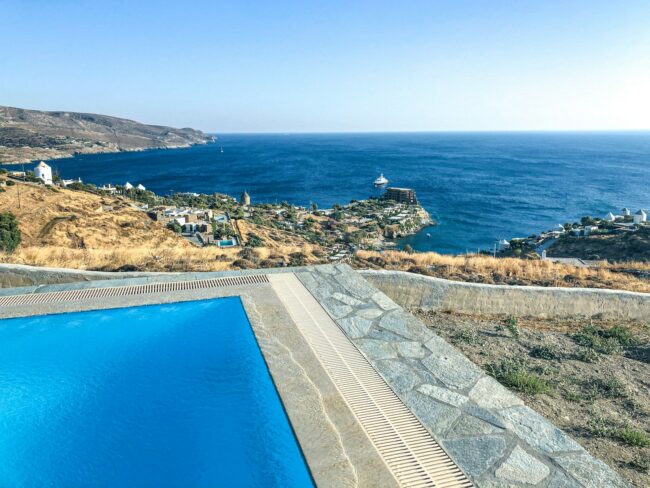
Kea Island (also known locally as Tzia) is one of Greece’s best-kept quality secrets. Located in the northern part of the Cyclades Islands, Kea maintains a distinct character despite geographically belonging to the famous island group that includes Mykonos and Santorini. The landscape here isn’t just the classic white-and-blue; it’s a fascinating blend of Neoclassical architecture, red-tiled roofs, rustic stone structures, and rich mountainous nature, including oak forests that are quite rare in this archipelago.
Although highly accessible, Kea remains largely off the radar of mass international tourism. The atmosphere is one of effortless elegance; this is where wealthy Athenians maintain summer homes and where luxury yachts anchor in quiet bays. The island combines traditional villages hanging on mountainsides, bays with crystal-clear cool waters, and a silence that allows for true disconnection. Unlike the party islands, the emphasis here is on quality of life, fine local cuisine, and a deep connection to nature and history.
For couples seeking a romantic and quiet vacation, Kea provides the ideal backdrop. The island features intimate boutique hotels, many overlooking the Aegean Sea from high hills. Spectacular sunsets can be viewed from the main town, Ioulis, while restaurants in the port of Vourkari offer an elegant candlelight dining experience right on the waterfront. The relaxed atmosphere allows for quality couple time without the hustle and bustle typical of more tourist-heavy islands.
Families will find Kea a safe and convenient destination, especially in areas like Otzias and Koundouros. The beaches in these regions are well-organized, with shallow, calm waters suitable for small children. Distances on the island are short, and the quick access from the mainland saves the long ferry hours that can be difficult when traveling with kids. The family-friendly vibe and lack of noisy nightclubs make for quiet, pleasant nights.
Groups of friends visiting Kea often enjoy renting private villas, a highly developed sector on the island. The area is very popular among sailing and yachting enthusiasts, with many groups arriving by sea as part of a sailing route in the Cyclades. Nightlife around the Vourkari port, while not as wild as Mykonos, offers high-quality bars and a vibrant, sophisticated atmosphere suitable for those looking for fun, good food, and excellent wine.
Kea is a paradise for hikers. The island is crisscrossed by an extensive, well-marked network of ancient trails, some paved with stone, connecting archaeological sites, villages, and secluded beaches. Independent travelers will find great interest in the rich history, visiting sites like Ancient Karthea—accessible only by foot or boat—and exploring the changing landscapes between oak forests and exposed cliffs.
History and Character
Kea’s history is rich and fascinating, dating back to the Neolithic period. In ancient times, the island was home to four independent city-states: Ioulis, Karthea, Koressia, and Poiessa. Remnants of this culture are scattered throughout the island, the most prominent being the “Lion of Kea,” an impressive archaic statue carved into rock from the 6th century BC. The island was known for its strict laws and unique customs in ancient times.
In the 20th century, the maritime area around Kea became an important diving site due to the presence of the HMHS Britannic shipwreck, the sister ship of the Titanic, which sank during World War I near the island’s shores.
Today, the place’s character is a blend of proud Greek rural life and Athenian sophistication. The locals, known as Tziotes, preserve traditional agriculture including beekeeping, cheese making, and meat processing, alongside high-end tourism. Local architecture in the capital, Ioulis, features stone houses with tiled roofs, winding alleys, and covered passageways, distinct from the white cubes of neighboring islands. Cars are not allowed inside Ioulis, preserving a rare silence and a time-travel atmosphere. Life on the island moves at a slow pace, with an emphasis on simple, high-quality pleasures.
Accommodation (Hotels and Apartments)
Accommodation options in Kea revolve mainly around small boutique hotels, luxury suite complexes, and private rental villas. You will hardly find huge “All Inclusive” hotels here. Most accommodations are concentrated around the port of Korissia, the upscale fishing village of Vourkari, the Otzias beach area, or the mountainous capital Ioulis for those seeking a more traditional atmosphere and panoramic views. Hospitality standards in Kea are considered very high, with an emphasis on design that blends with the environment and personal service. Here is a list of recommended places to stay on Kea:
- Porto Kea Suites – An elegant all-suite hotel located in Korissia, near the port and the beach. The hotel combines traditional architecture with modern design, featuring a large pool and manicured gardens. It is very suitable for families and couples looking for comfort and easy access to restaurants and transport, while maintaining a high standard of hospitality and spa services.
- Aigis Suites Kea is a luxury boutique hotel located on a hill above Vourkari, providing one of the most beautiful views on the island, especially at sunset. The place is particularly suitable for honeymooners or a romantic vacation, characterized by meticulous minimalist design, an infinity pool, and an atmosphere of total relaxation and personal service.
- Anemousa Studios – An apartment and studio complex located in the Otzias area, a short walk from the main beach. The place offers good value for money and is very suitable for families with children due to the proximity to the convenient beach and the equipped kitchenettes in the units. The atmosphere is homey, and the units are spacious and clean.
- Ydor Hotel & Spa is a relatively modern and luxurious hotel located near Vourkari. There is a strong emphasis on contemporary design, a pampering spa center, and a beautiful pool. This is an excellent destination for couples and travelers looking for high-level indulgence, poolside cocktails, and proximity to the island’s nightlife center.
- Agrikea is a unique guesthouse located in a quiet rural area, combining warm hospitality with panoramic views and rustic-modern design. The place suits those wanting to get away from touristy areas and connect with nature and the island’s tranquility. Breakfast is based on fresh local products, and the owners provide personal and warm attention.
Attractions and Things to Do
The main activity in Kea combines wandering through villages with exploring nature. The capital, Ioulis, is an attraction in itself. The town is built entirely like a natural amphitheater on the mountainside and is car-free. Walking through the narrow alleys reveals traditional houses, small squares, and breathtaking views. One of the important landmarks near Ioulis is the Lion of Kea statue. A short and easy hiking trail leads to this ancient statue from the 6th century BC, which wears a mysterious smile and is considered the symbol of the island. Ioulis also houses the Archaeological Museum of Kea, displaying fascinating finds from the Early Cycladic period.
For hiking and history enthusiasts, the trail to Ancient Karthea is a must. This is an impressive archaeological site located on a secluded beach in the southeast of the island. Access is possible only by foot (about an hour and a half walk each way) or by boat. At the site, you can see the remains of the Temple of Apollo and the Temple of Athena, an ancient theater, and city walls, all touching the blue waterline.
In the north of the island, on a steep and dramatic cliff, stands the Monastery of Panagia Kastriani. Dedicated to the patron saint of the island, the monastery provides one of the most beautiful viewpoints in the Aegean Sea. The white and blue structure stands out against the dark rocks and the deep sea below. The drive there is winding but rewarding. Furthermore, diving enthusiasts will find great interest in Kea, as the waters around the island hold several famous shipwrecks, and local clubs organize diving tours for professionals.
Those looking for a culinary-agricultural experience can visit agro-tourism farms scattered around the island, learn about the production of Kea’s famous thyme honey, or participate in local cooking workshops. The island is also known for its oak forests, a unique phenomenon in the usually dry Cyclades Islands. It is possible to hike through them even on relatively warm days.
Beaches
Kea’s beaches are very diverse, ranging from organized beaches with umbrellas and bars to wild bays accessible only by dirt roads or boat. The water on the island is clear and cool, and the sand is usually golden or mixed with small pebbles.
- Koundouros Beach is one of the most popular and developed beaches on the island. It features full tourist infrastructure, including restaurants, cafes, sunbeds, and water sports. The water is very calm due to the shape of the bay, making it ideal for swimming and families. The area is considered upscale and surrounded by many villas.
- Otzias Beach is the longest beach on Kea. It is a large, circular bay with shallow water, tamarisk trees providing natural shade, and two excellent tavernas at the ends. The beach is very convenient for families with children and toddlers. Because of its enclosed shape, it is relatively protected from the strong Meltemi winds.
- Gialiskari Beach is a charming small bay located a short walk from the port of Korissia. It is popular among young people and locals, with a lively beach bar, music, and a happy atmosphere. The water is clear and pleasant, and eucalyptus trees provide shade at the back of the beach.
- Spathi Beach is considered by many to be the most beautiful beach on the island. Located in northeast Kea, access involves driving on a dirt road of about 5 kilometers (a high-clearance vehicle is recommended). The effort pays off when you reach a strip of golden sand and deep turquoise water. There is one excellent restaurant on the beach and a few sunbeds, preserving its wild character.
- Xyla Beach is a secluded and quiet beach on the west coast of the island. Access is via a dirt road, so it is less crowded than other beaches. There is minimal infrastructure (sometimes a small kiosk and a few umbrellas), preserving the feeling of isolation and nature. The water is particularly deep and clear.
Nightlife, Restaurants, and Entertainment
Nightlife in Kea is mainly concentrated in the Vourkari area and to some extent in Korissia and Ioulis. Don’t expect huge clubs, as the style here is more lounge-oriented. Stylish cocktail bars on the pier and a relaxed atmosphere of conversations into the night with a glass of wine. The local cuisine is excellent, with an emphasis on “Loza” (local smoked pork), local cheeses, honey, and Lobster Pasta (Astakomakaronada) which has become the island’s signature dish.
- Breeze Finger Food Bar located at Korissia port, is active from morning until night, but in the evening turns into a pleasant hangout spot with cocktails and light music. Its location on the water allows you to watch ferries and boats arriving while you enjoy your evening.
- Leon Bar is a bar located in the capital, Ioulis. The place provides a different experience from the beach bars, with panoramic views from the mountain and a more local vibe. on cooler evenings, it’s an excellent refuge with a warm, homey atmosphere.
- Aristos is a famous taverna in Vourkari, known throughout the region for its lobster pasta. The place is always full and bustling with life, with tables right on the waterline. The menu focuses on fresh seafood and fish, and the service is fast and professional.
- To Steki tou Stroggili is a traditional taverna located in Korissia. The place specializes in grilled meats and simple, delicious authentic Greek cuisine. The atmosphere is casual and joyful, and prices are fair. An excellent place to taste the local Loza and tasty lamb dishes.
- Rolando’s Ouzeri is a culinary institution in the heart of Ioulis. Rolando, the owner, is a colorful character, and the food served is a masterpiece of creative local cuisine based on fresh ingredients. The focus is on small dishes (meze) alongside ouzo and tsipouro.
- O Philippas is a rustic taverna located in the Giristes area in the heart of the island, on the way to Ancient Karthea. The place is famous for its roast suckling pig (Gourunopoulo) and traditional oven dishes. This is a rural meat experience different from the coastal restaurants, surrounded by green scenery.
Transport and Arrival
Getting to Kea is different from most Cycladic islands, which is its great advantage. Ferries to Kea do not depart from the central Piraeus Port, but from Lavrio Port located at the southeastern tip of Attica. From Athens Airport, you can reach Lavrio by taxi (about a 30-minute drive) or by intercity bus.
The ferry ride from Lavrio to Kea takes only about one hour on a regular ferry. Frequency is high, especially during the summer season and weekends. Within the island, public transport exists (buses connecting the port, Ioulis, and Otzias), but the frequency is not always sufficient for those wishing to explore the island in depth.
The definite recommendation for those wanting to tour the island is to rent a car. It is advisable to rent an SUV or a small jeep, as access to some of the most beautiful beaches (like Spathi or Xyla) is via dirt roads. You can rent a car at the port of Korissia immediately upon disembarking the ferry, or rent it in Athens/Airport and bring it on the ferry; just make sure your insurance covers ferry travel. Taxis exist on the island, but their number is limited.
Important Tips
- Best Season: The best times to travel to Kea are late spring (May-June) and early autumn (September). During these months, the weather is perfect for walking and swimming, and the island is less crowded. July-August are busy with domestic Athenian tourism, especially on weekends.
- Winds: Like in all Cycladic islands, the northern “Meltemi” winds blow in summer. On such days, it is recommended to go to protected beaches on the west or south side (like Koundouros) and avoid the northern beaches.
- Walking: If you plan to hike the ancient trails, equip yourself with good walking shoes. The stones can be slippery, and the terrain is mountainous.
- Money: Credit cards are accepted in most places, but in small villages and some beach kiosks, it is worth having cash.
- Reservations: If you arrive on a weekend in July-August, it is mandatory to book accommodation and tables at popular restaurants in advance.
In conclusion, Kea is the perfect choice for those looking for the “Greece of the Greeks.” It is an island that combines high accessibility from Athens with a complete sense of freedom, fine cuisine, rich nature, and great beaches, without the heavy commercialization of its famous neighbors. If you are looking for quality, quiet, and style, Kea is your next destination.
Useful links